
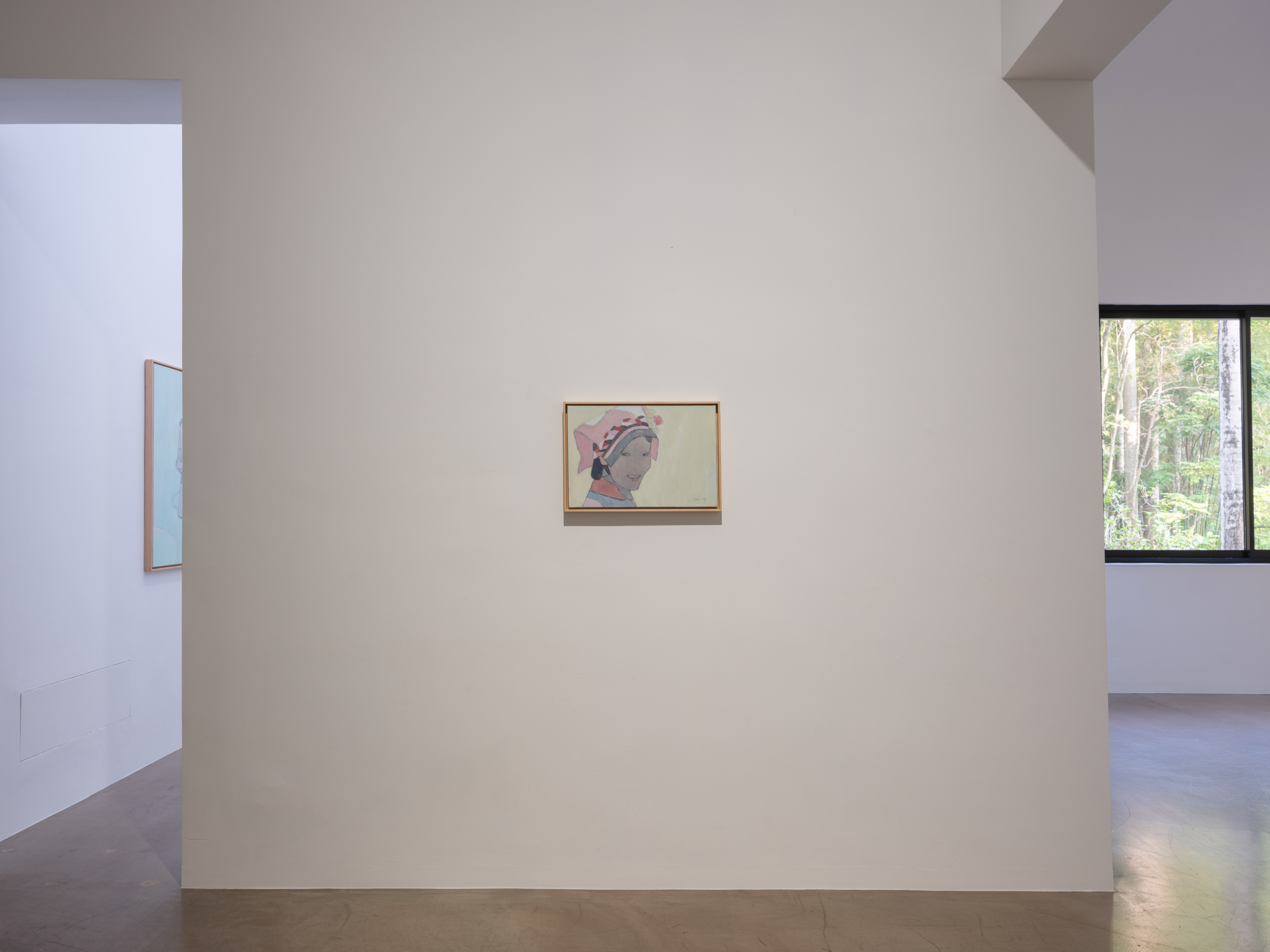
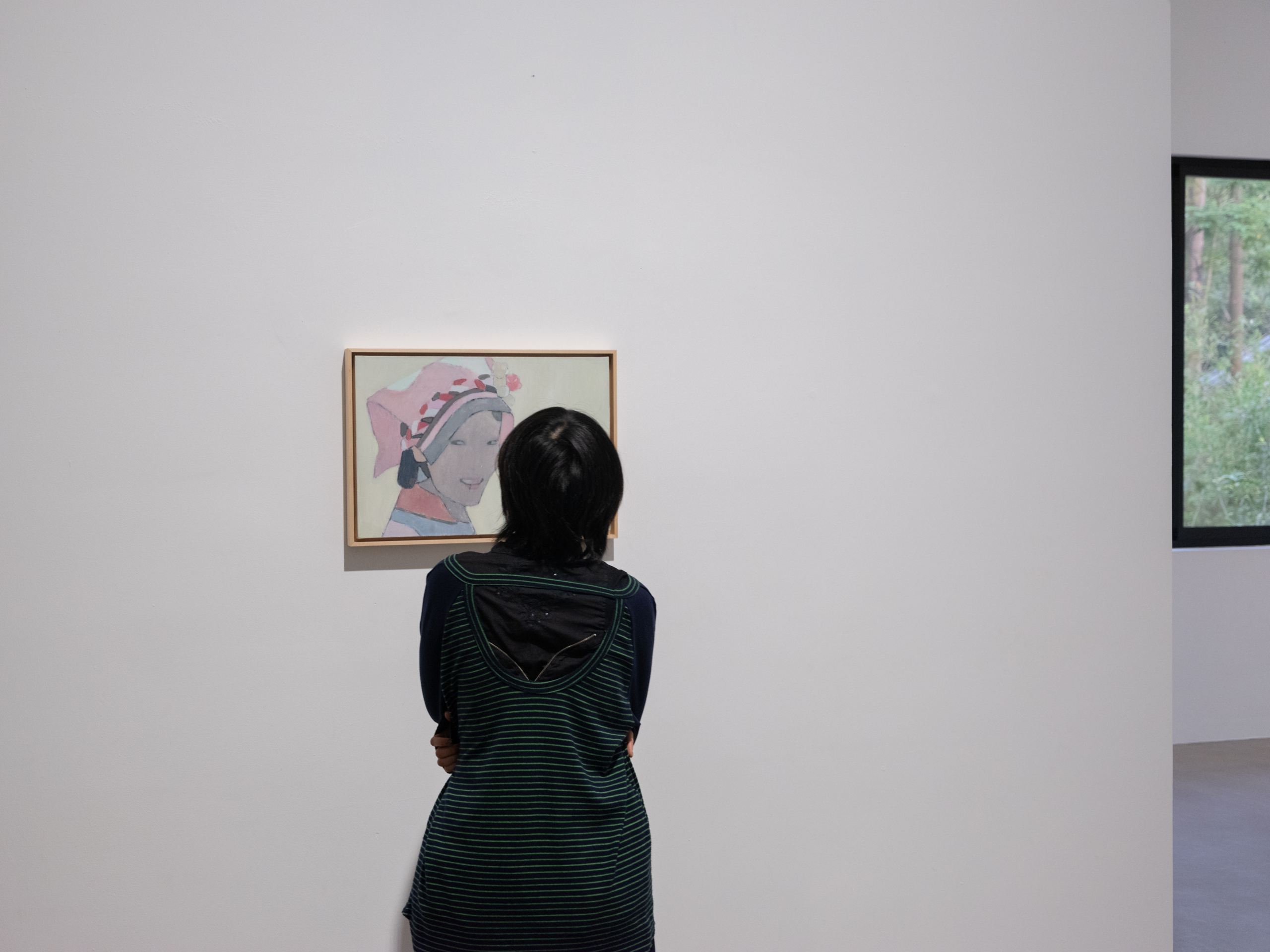
From the expression of flowers to the countenance of human figures, from the posture of history to the shape of time, Wang Yin: Red Peony, Green Peony seeks to weave the artist’s imagery across nearly twenty-five years. Unintentionally, we find ourselves entering several moments that appear disparate—each unfolds through its own context and point of departure, yet together they form multiple pathways for seeing and thinking through Wang Yin’s painting practice.
In the mutual gaze between viewer and painting, the body appears to become a landscape, gathering all the traces by which a person is shaped. Through the deep-mining and repeated retrieval of memory, Wang Yin returns with a quiet tension—one that links the times of the past and of the future. Within this exchange of gazes, we may sense the fragrance that emanates from the depths of time, as well as an anticipation toward the unknown.
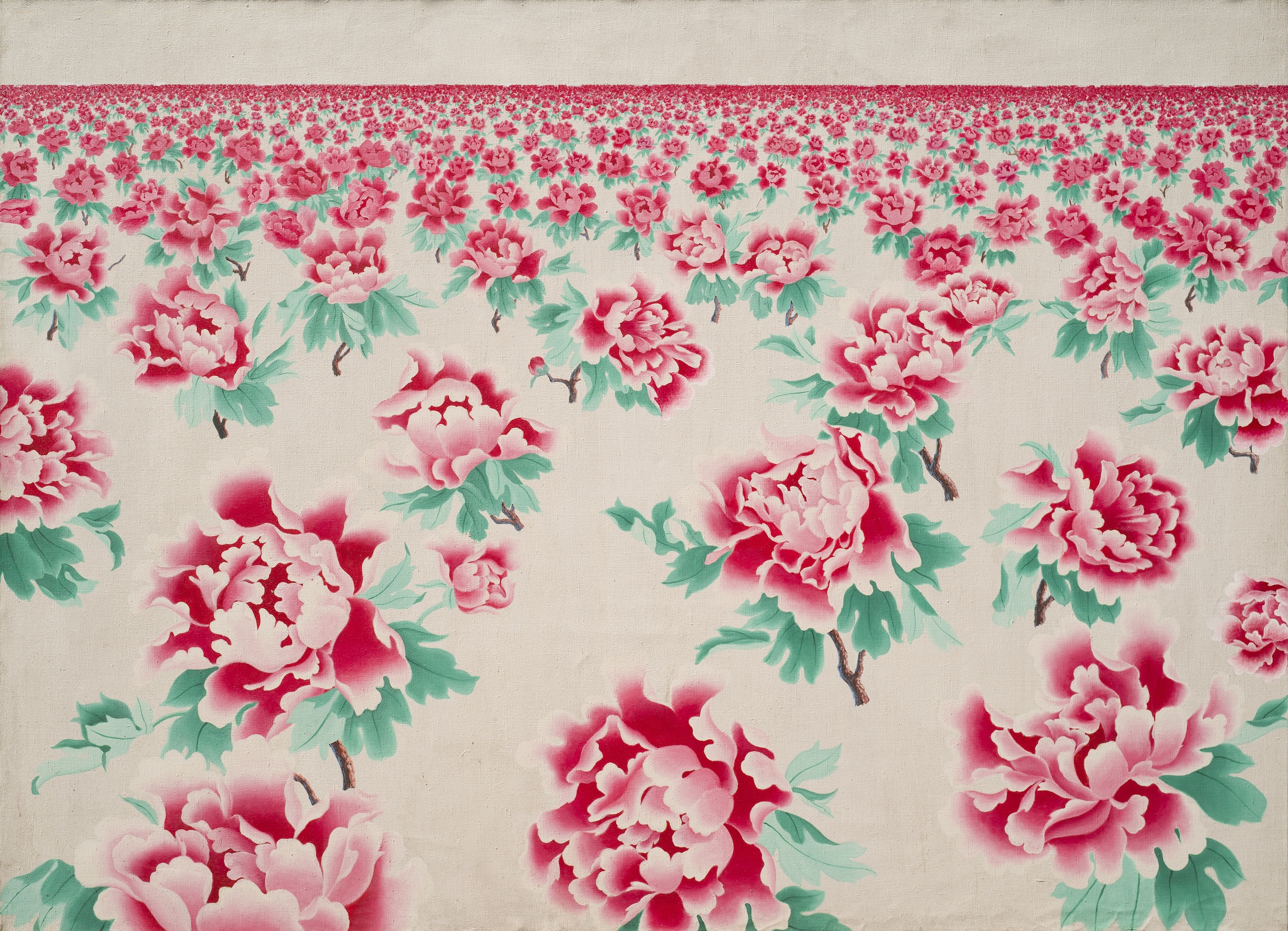
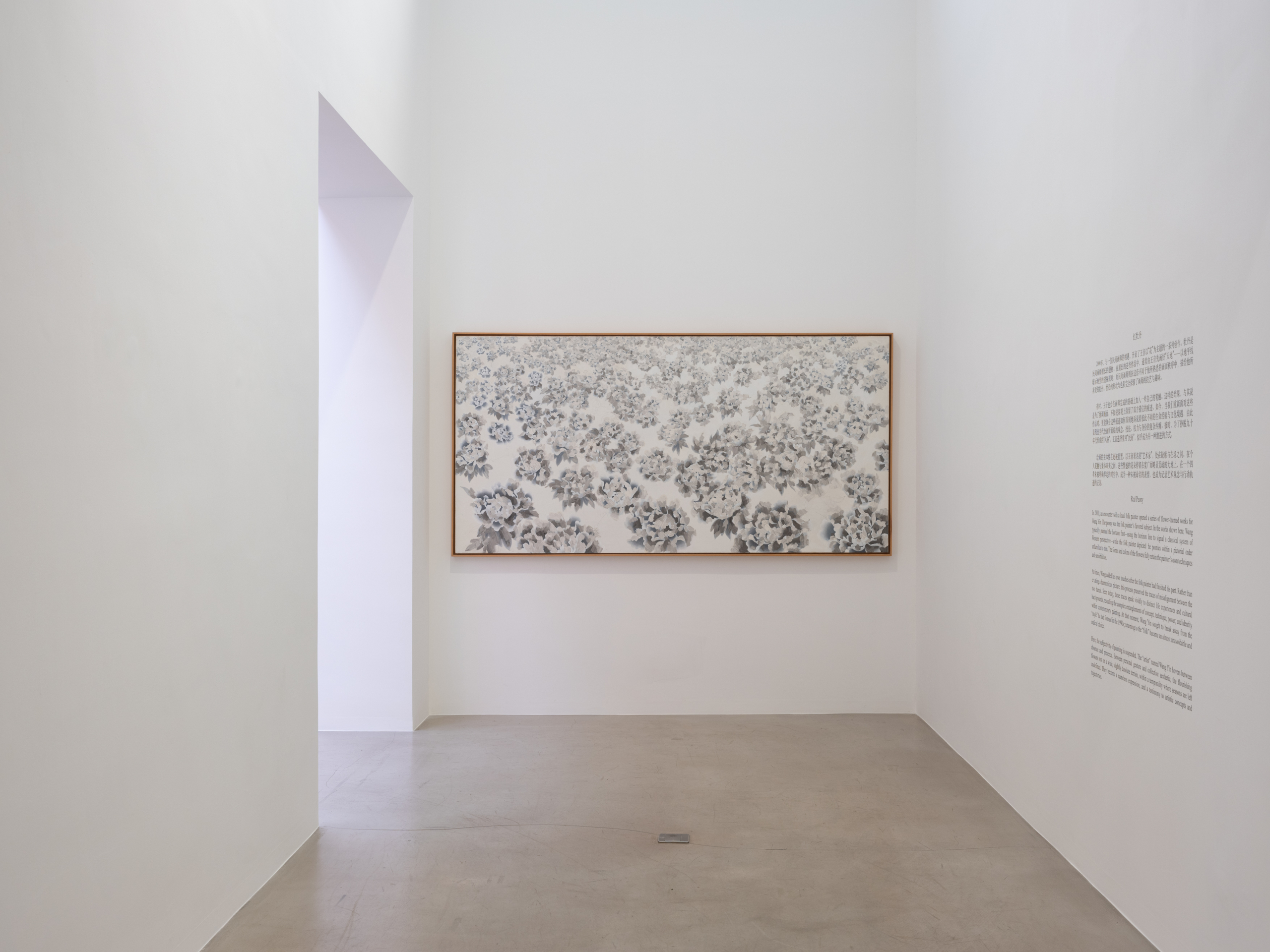
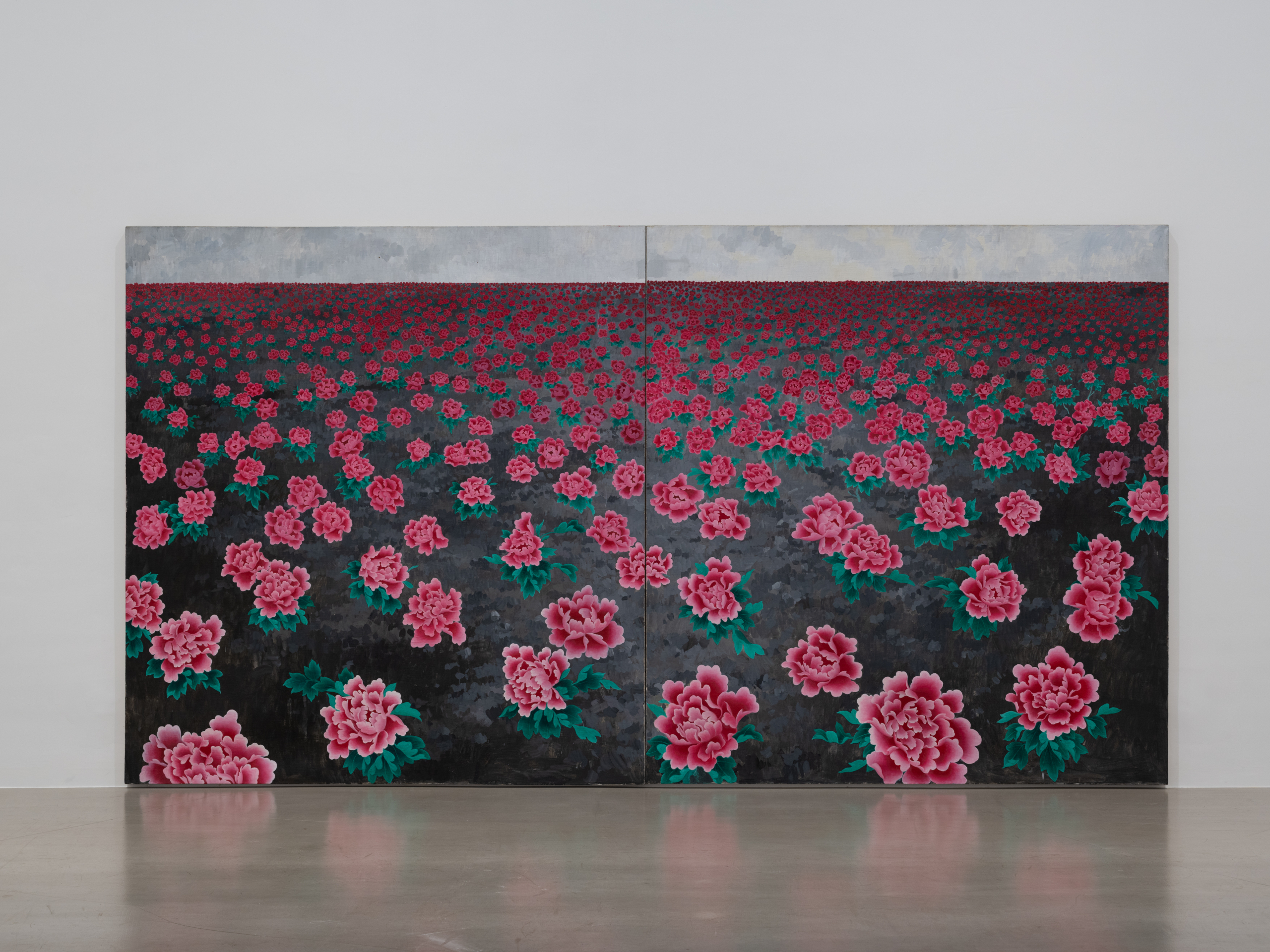
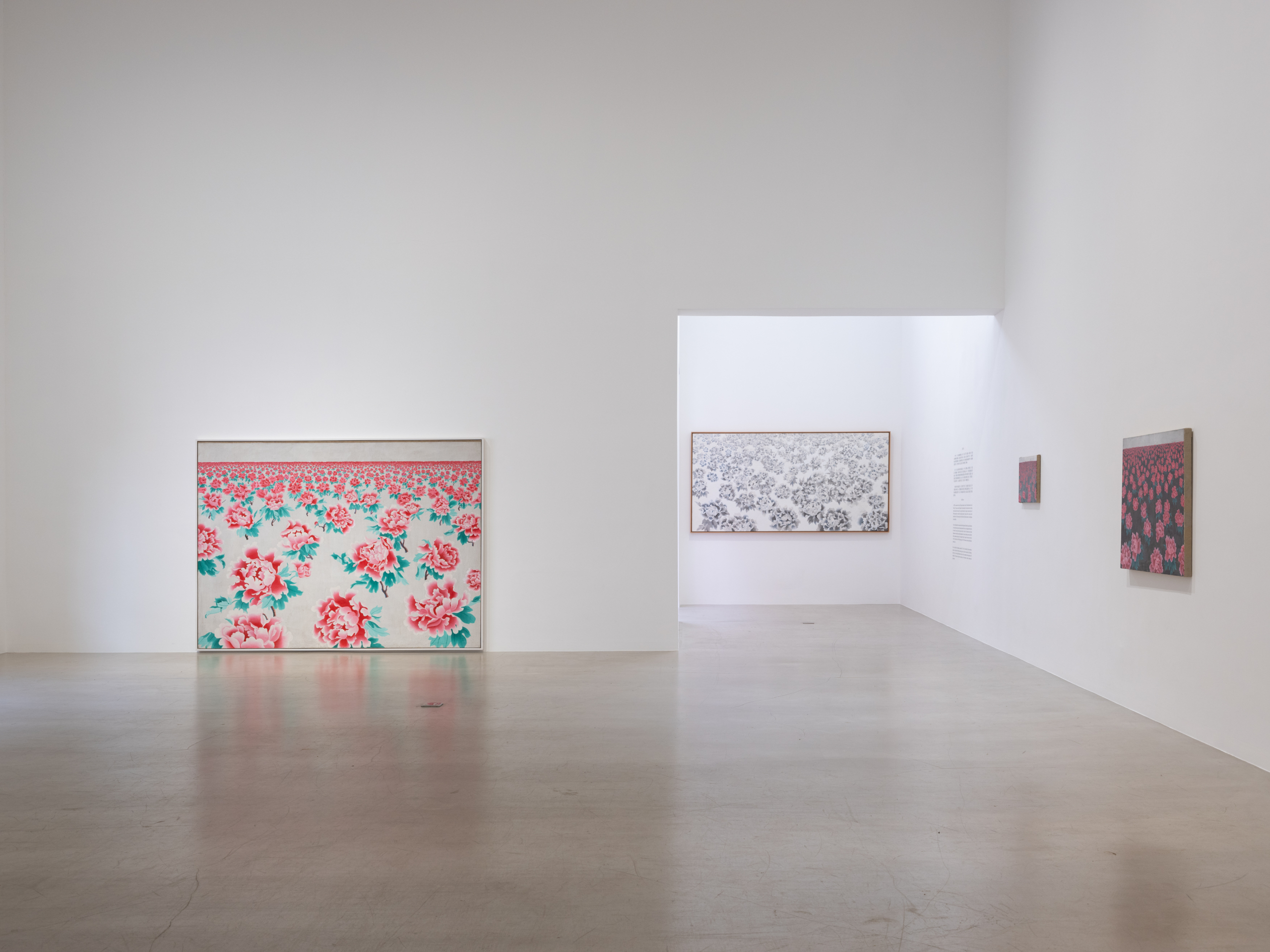
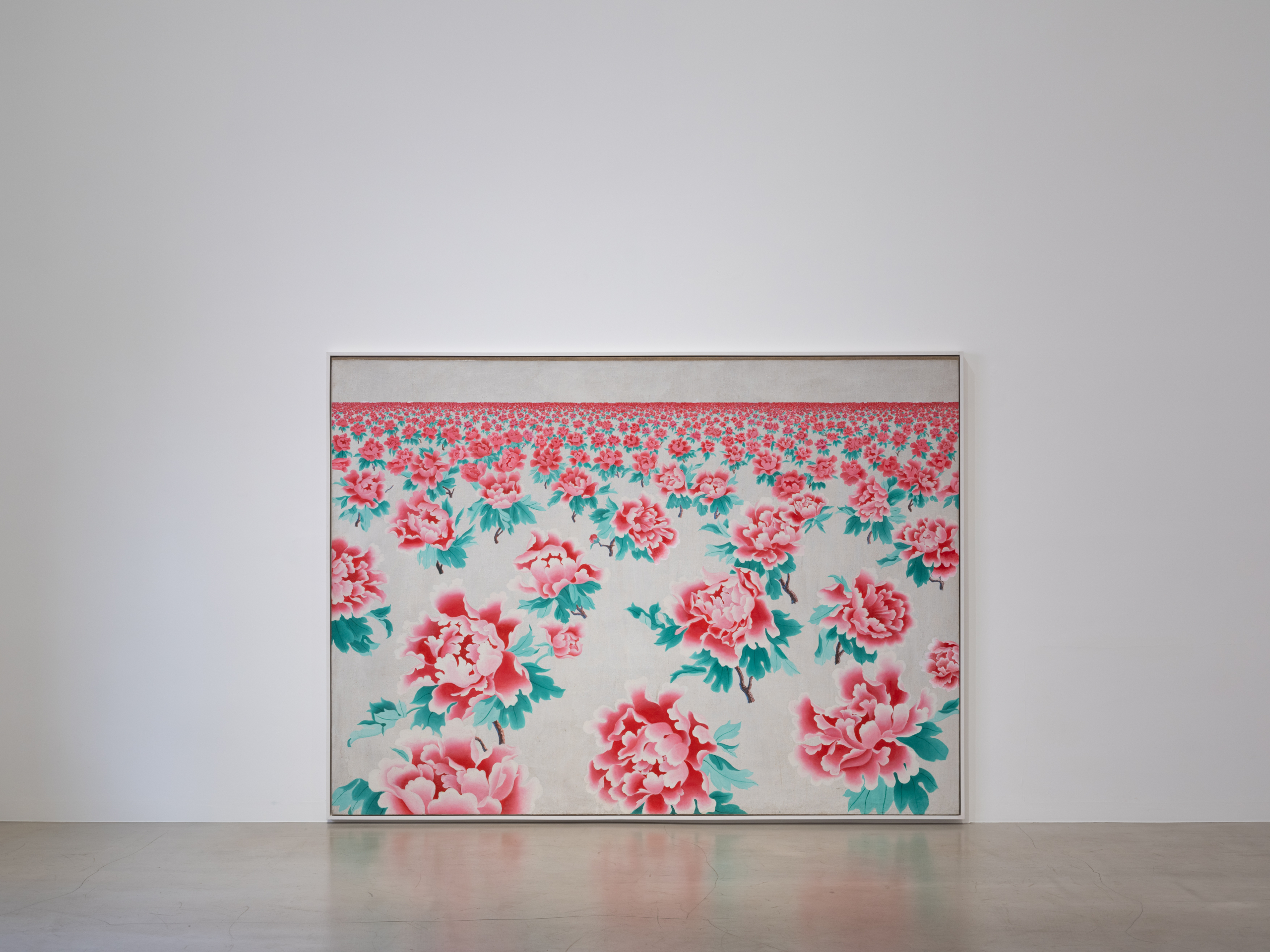
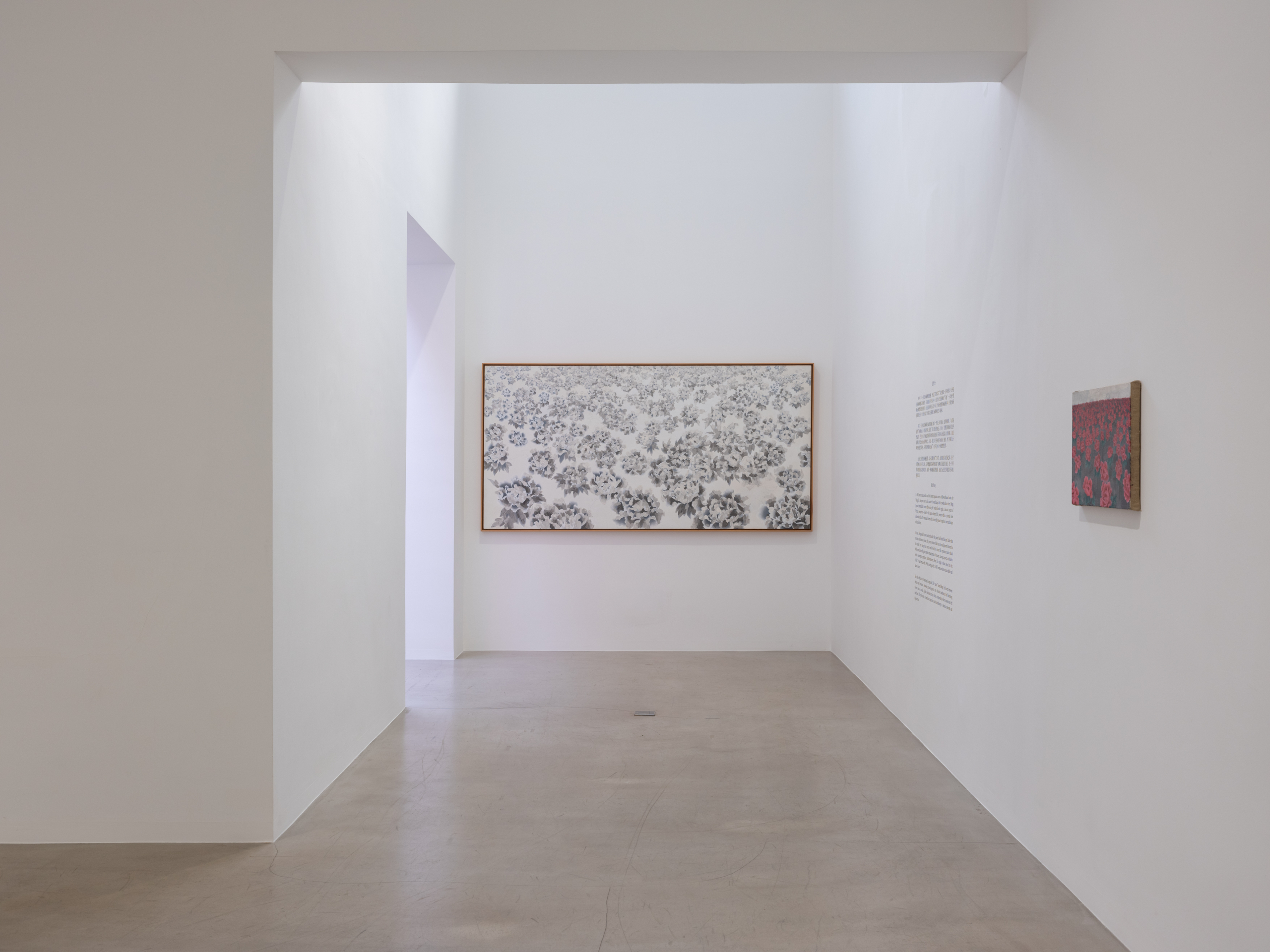
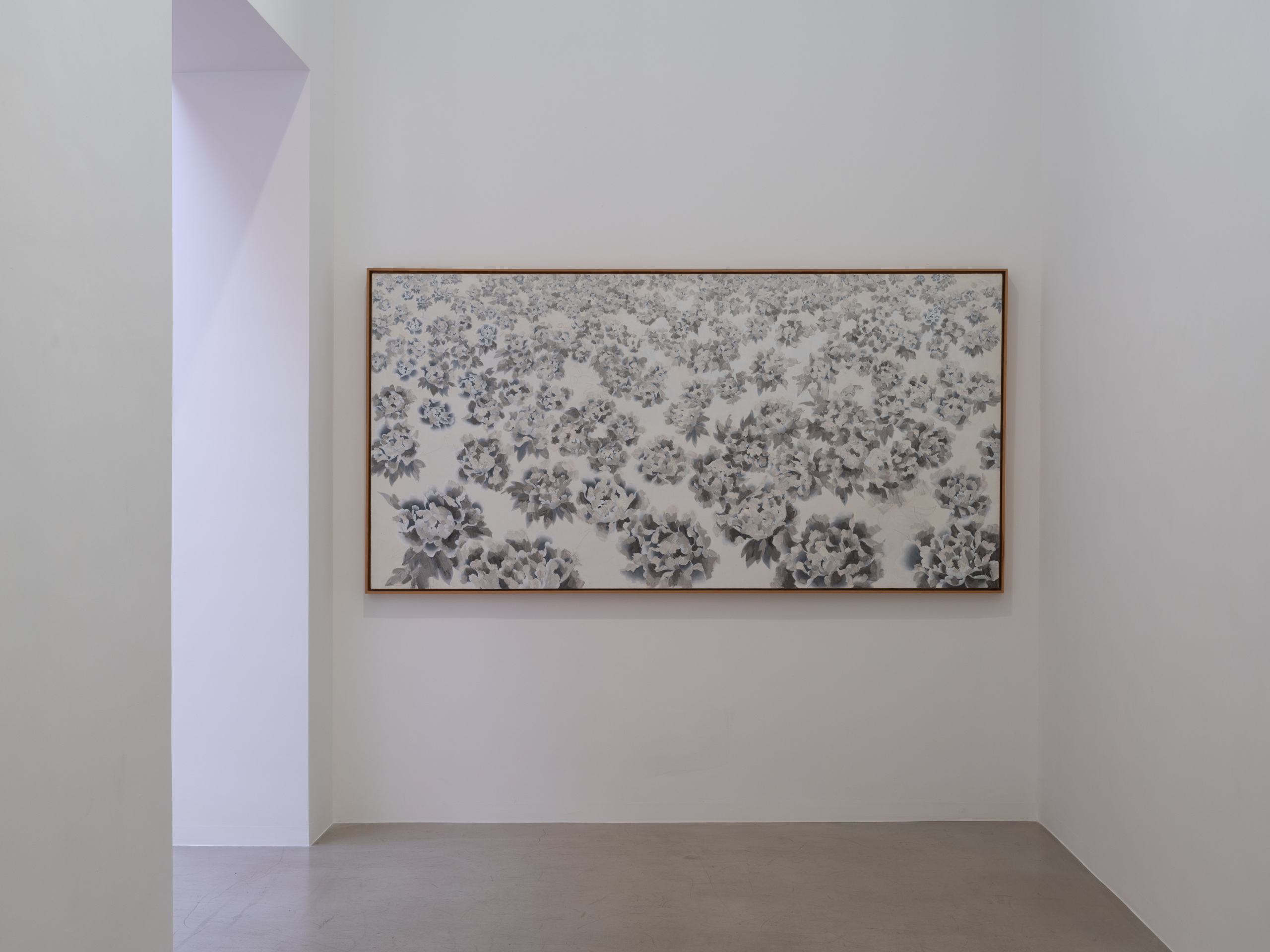
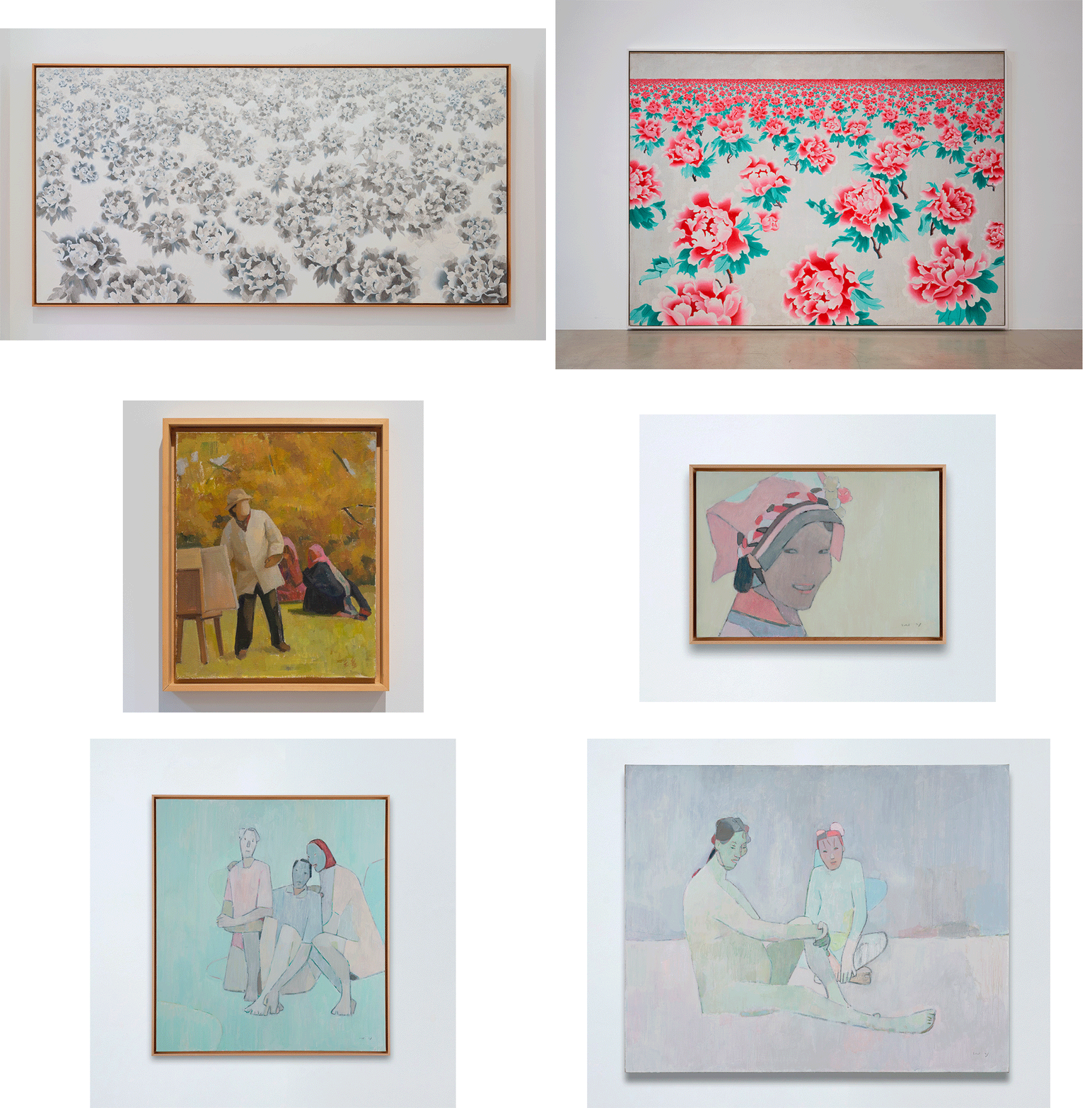
Wang Yin, Flower, 2001, acrylic on canvas, 180 × 250 cm.
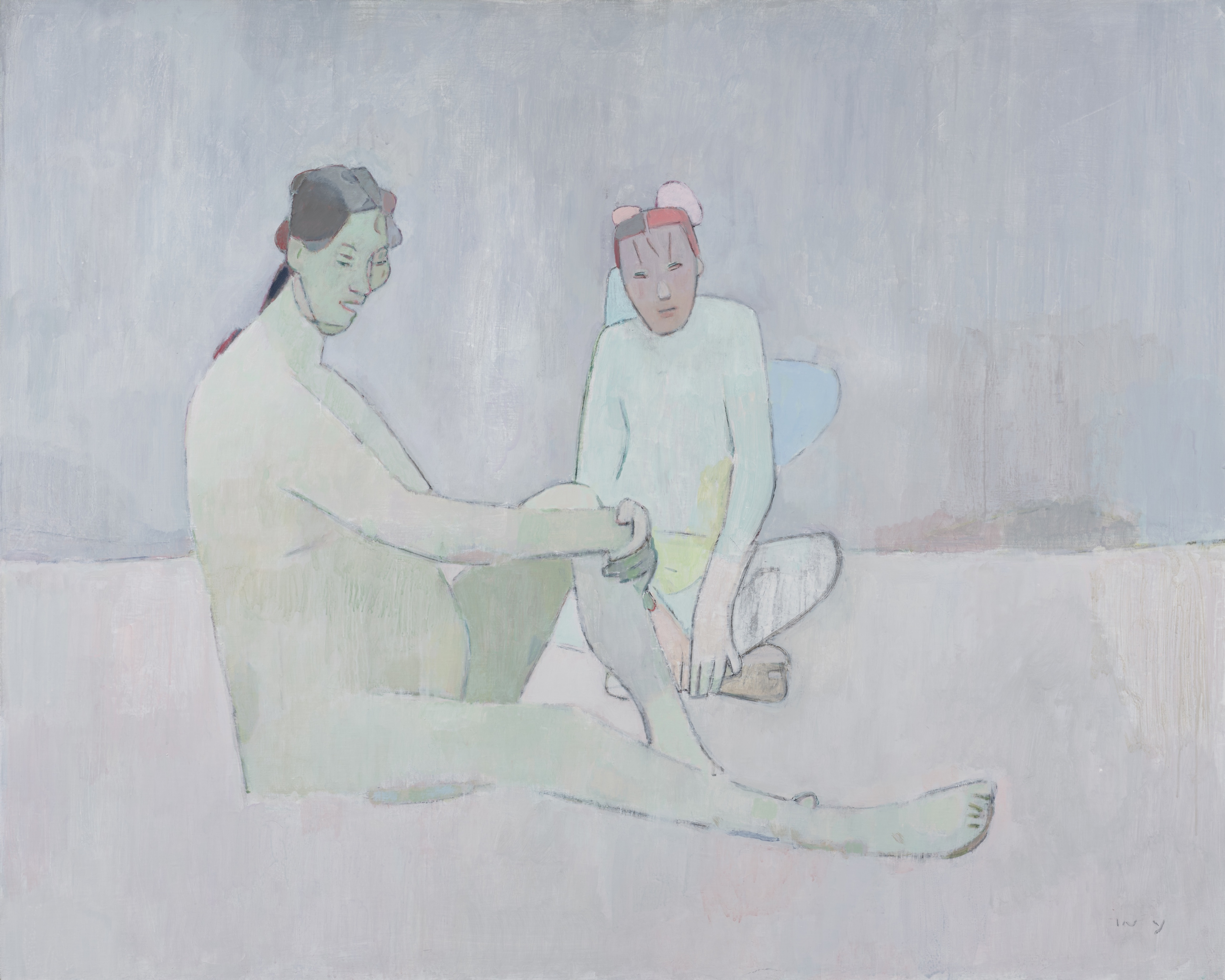
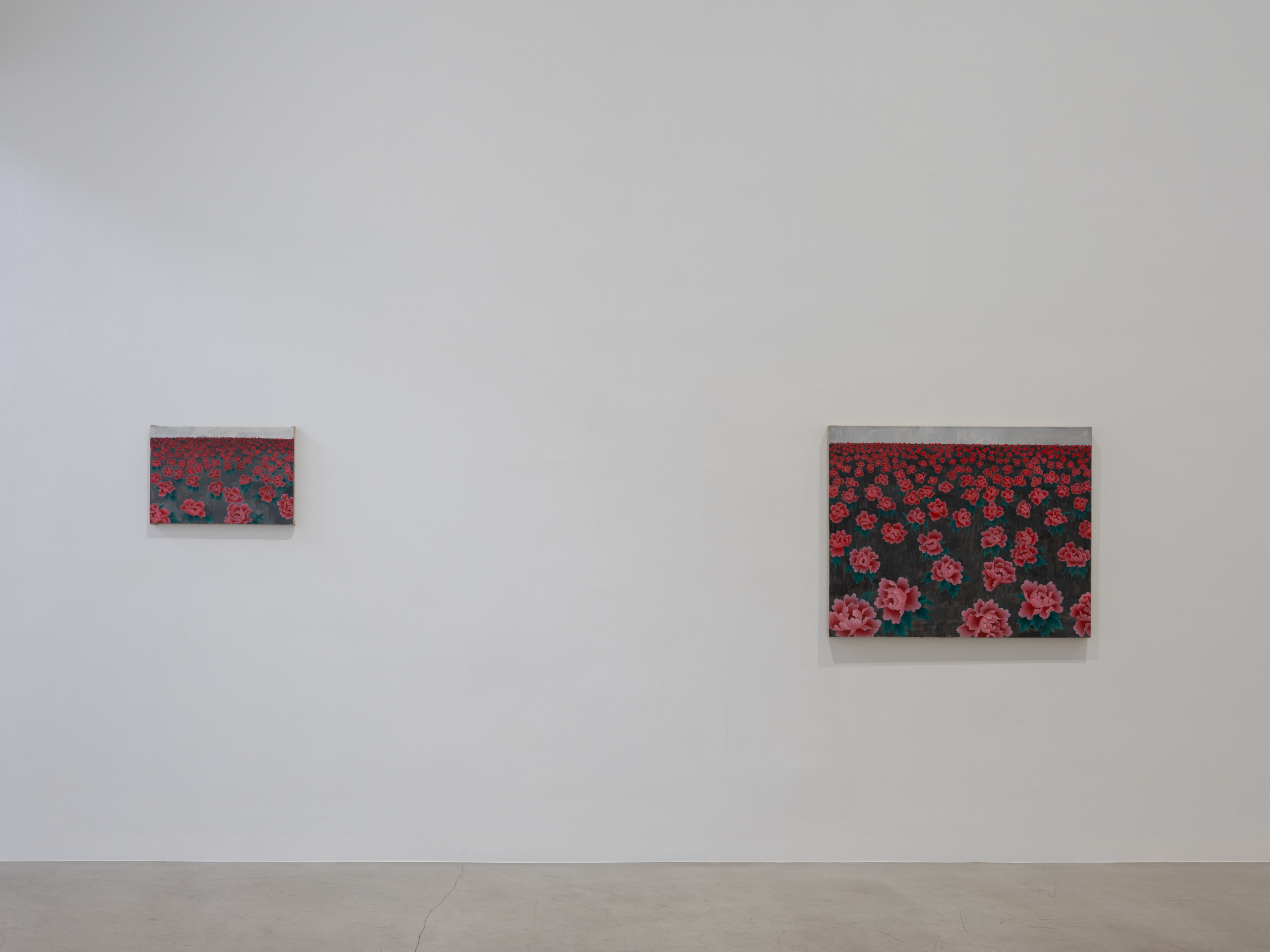
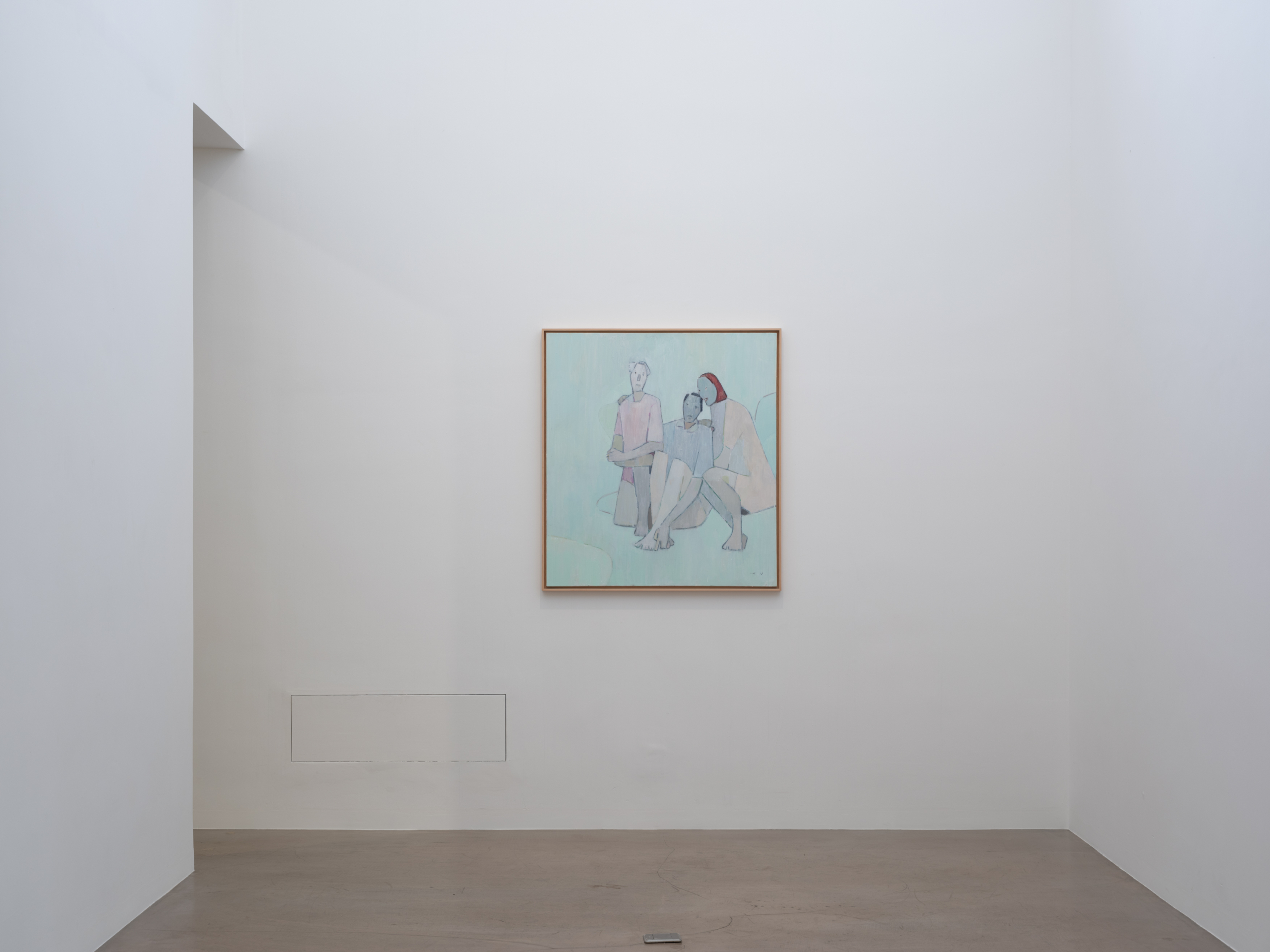
Wang Yin, Green Peony, 2024-2025, acrylic on canvas, 120 × 150 cm.
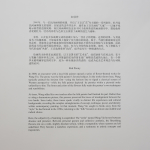
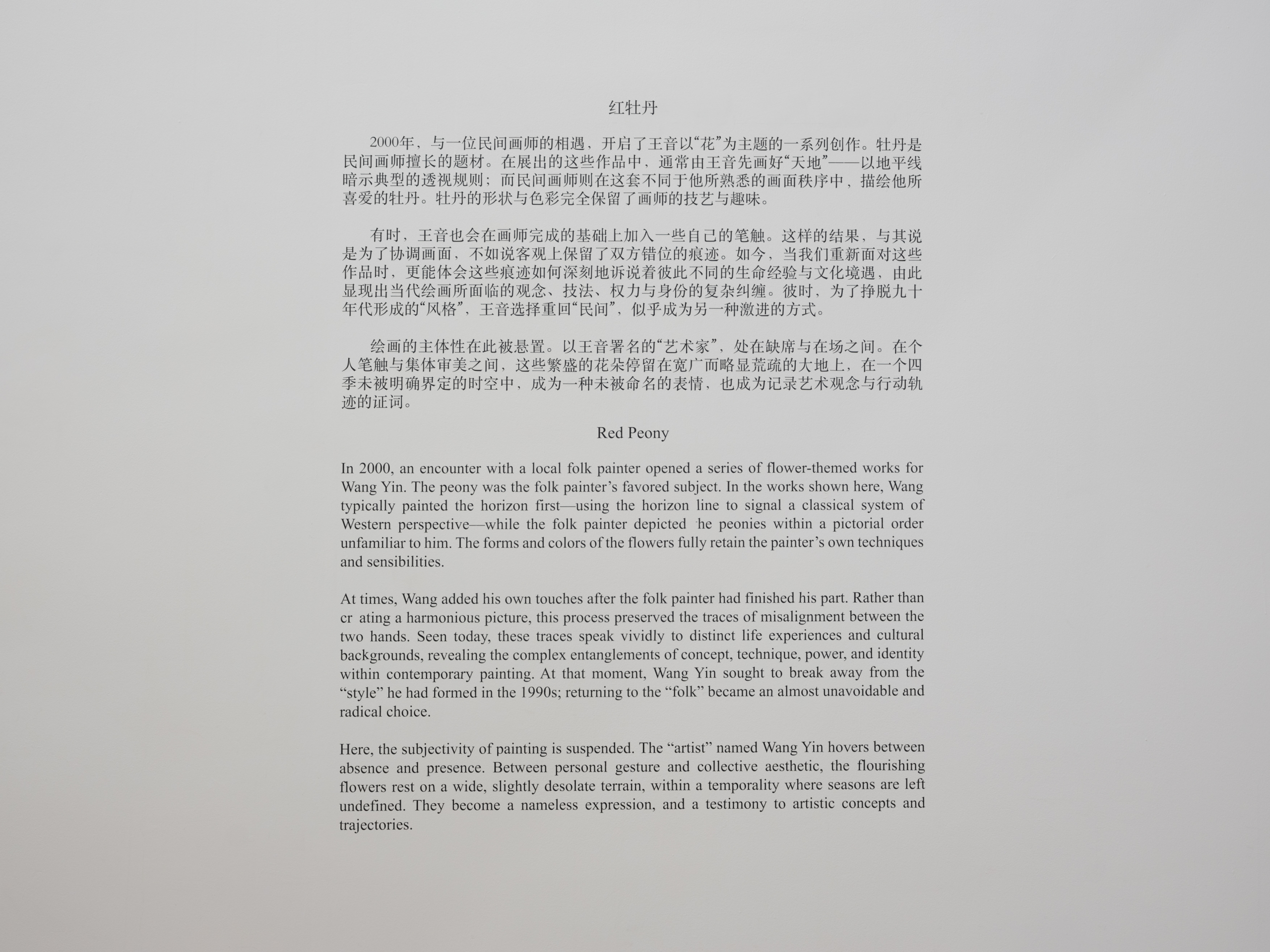
Red Peony
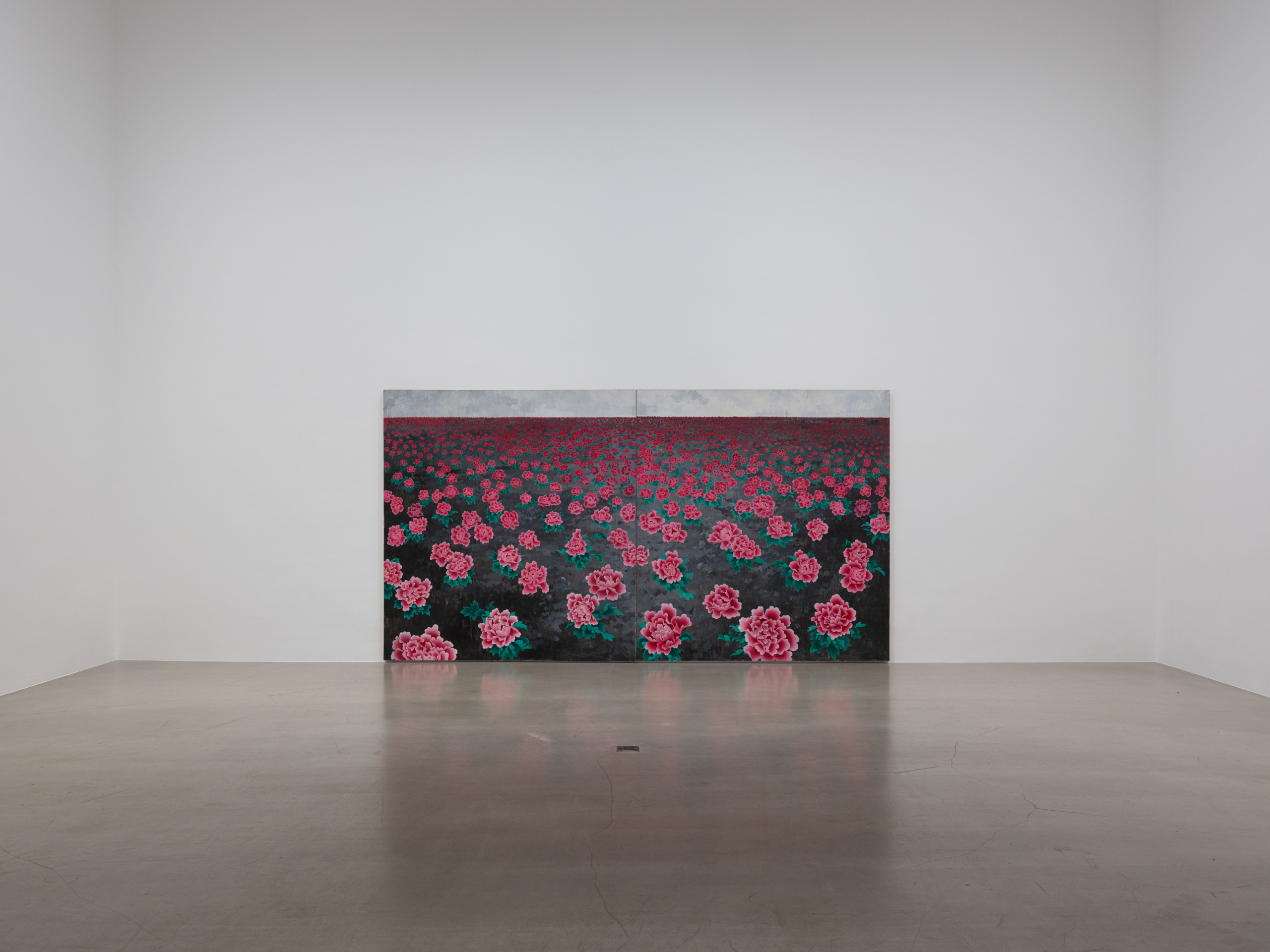
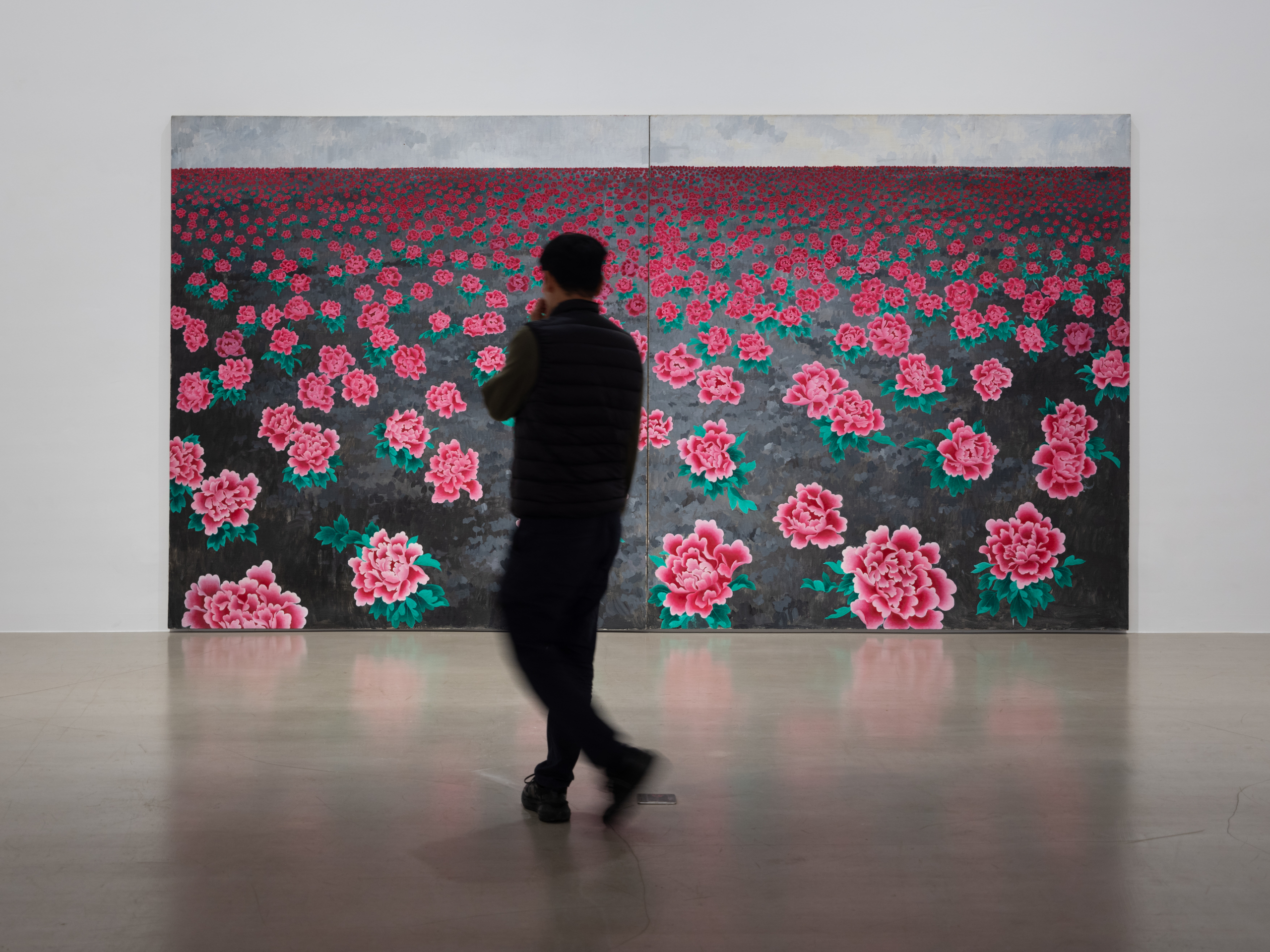
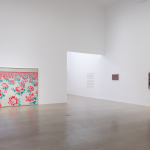
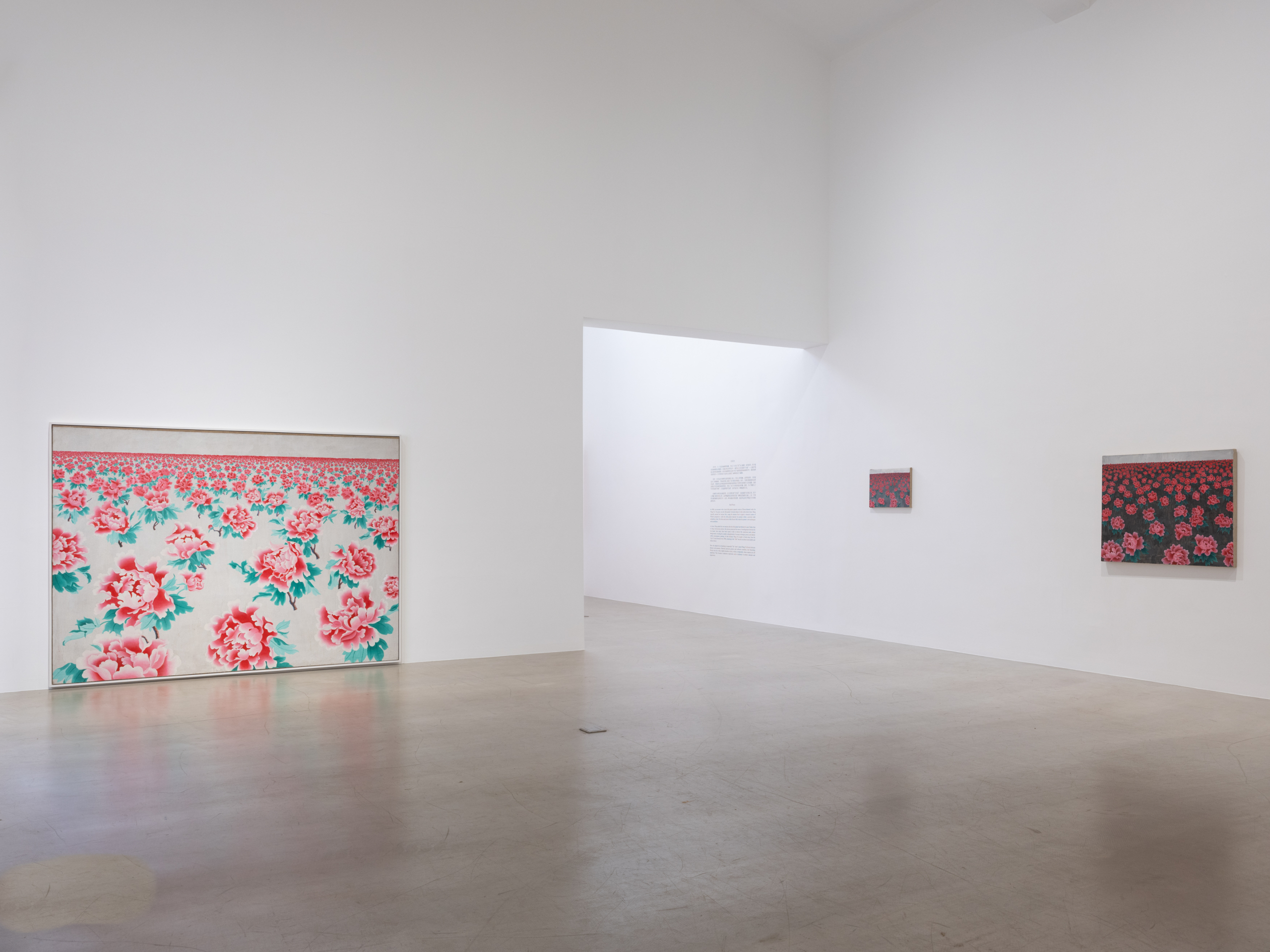
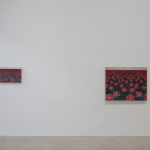
In 2000, an encounter with a local folk painter opened a series of flower-themed works for Wang Yin. The peony was the folk painter’s favored subject. In the works shown here, Wang typically painted the horizon first—using the horizon line to signal a classical system of Western perspective—while the folk painter depicted the peonies within a pictorial order unfamiliar to him. The forms and colors of the flowers fully retain the painter’s own techniques and sensibilities.
At times, Wang added his own touches after the folk painter had finished his part. Rather than creating a harmonious picture, this process preserved the traces of misalignment between the two hands. Seen today, these traces speak vividly to distinct life experiences and cultural backgrounds, revealing the complex entanglements of concept, technique, power, and identity within contemporary painting. At that moment, Wang Yin sought to break away from the “style” he had formed in the 1990s; returning to the “folk” became an almost unavoidable and radical choice.
Here, the subjectivity of painting is suspended. The “artist” named Wang Yin hovers between absence and presence. Between personal gesture and collective aesthetic, the flourishing flowers rest on a wide, slightly desolate terrain, within a temporality where seasons are left undefined. They become a nameless expression, and a testimony to artistic concepts and trajectories.
Borderland
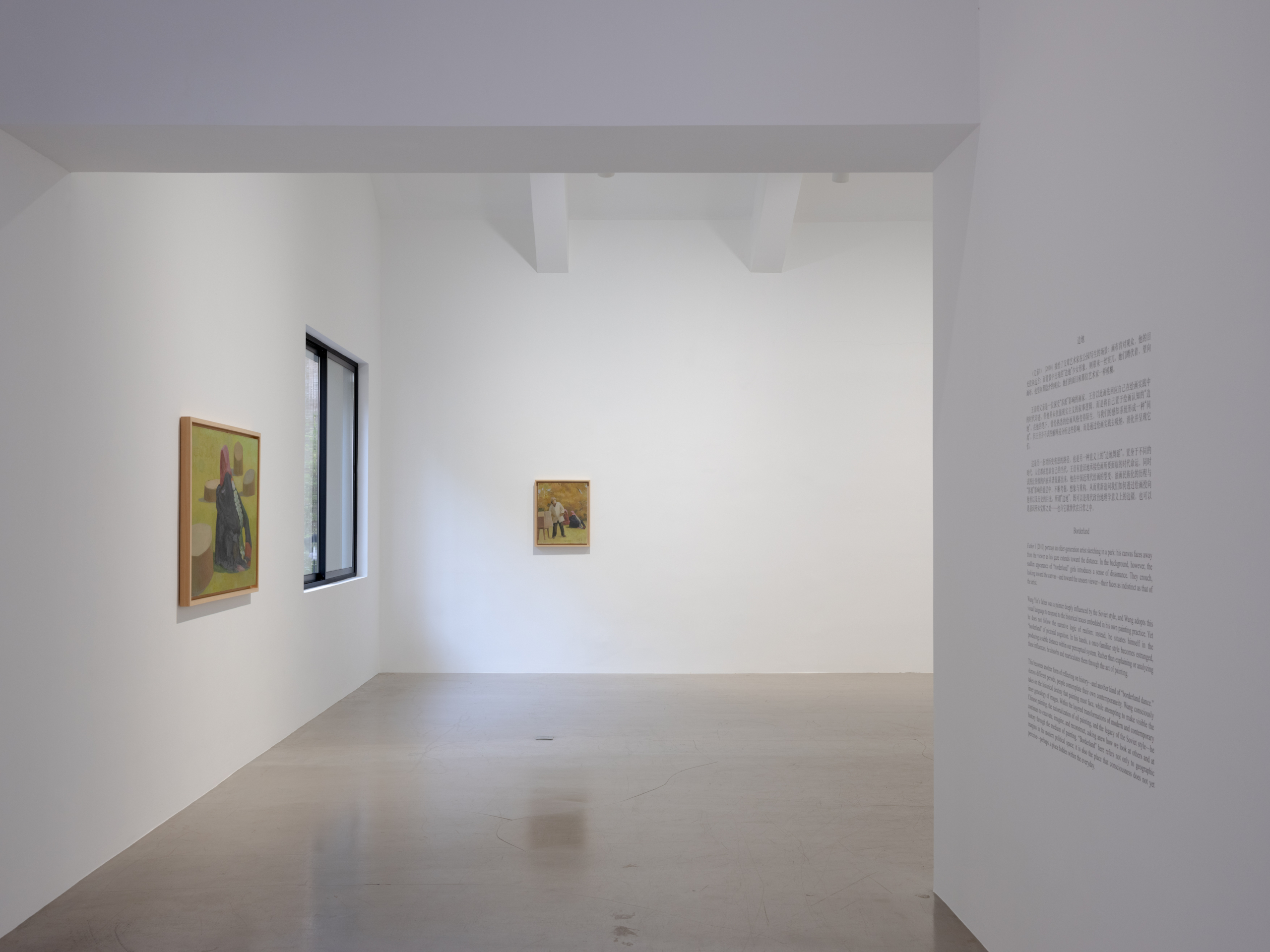
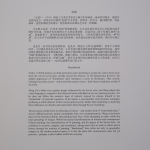
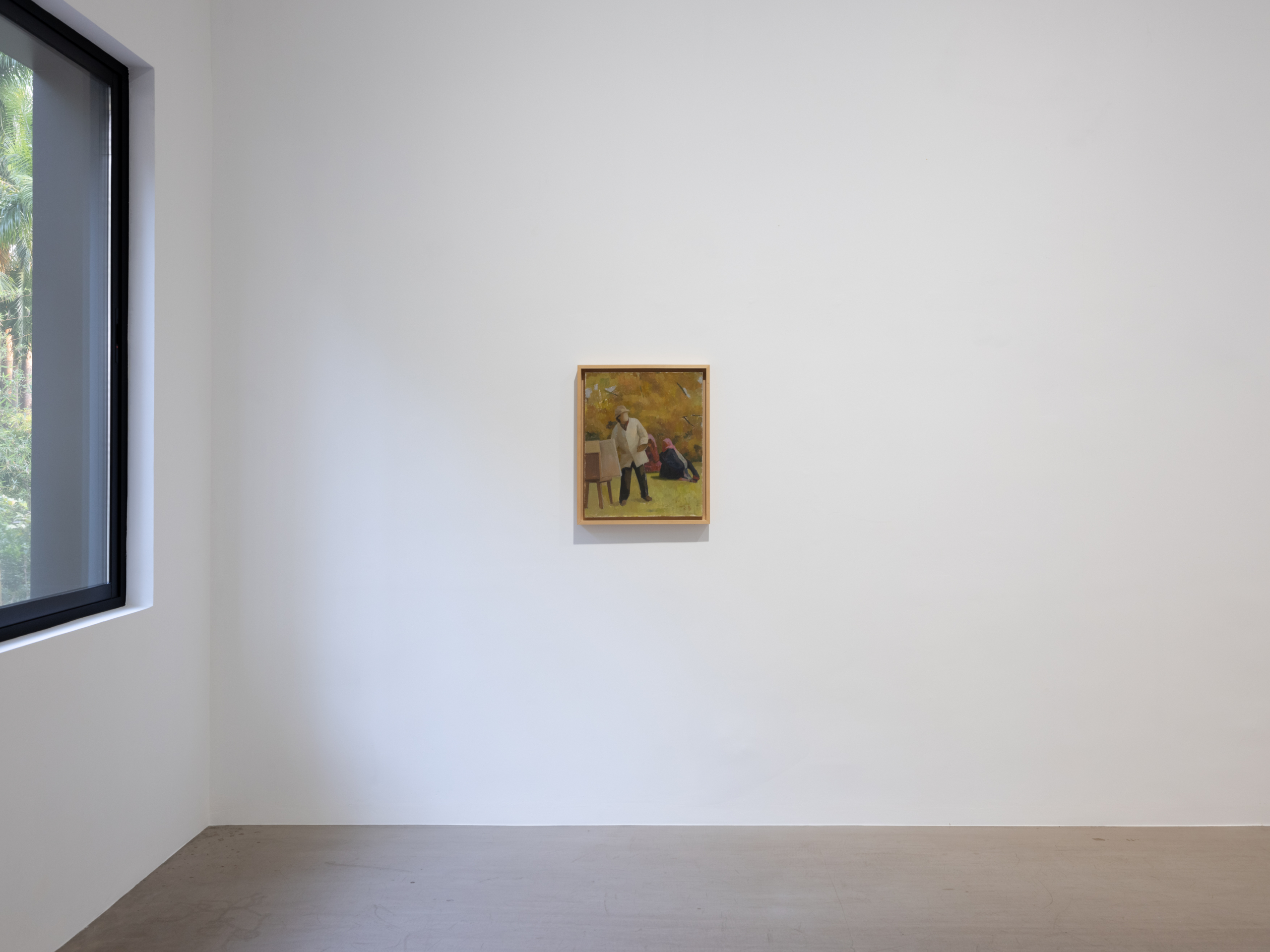
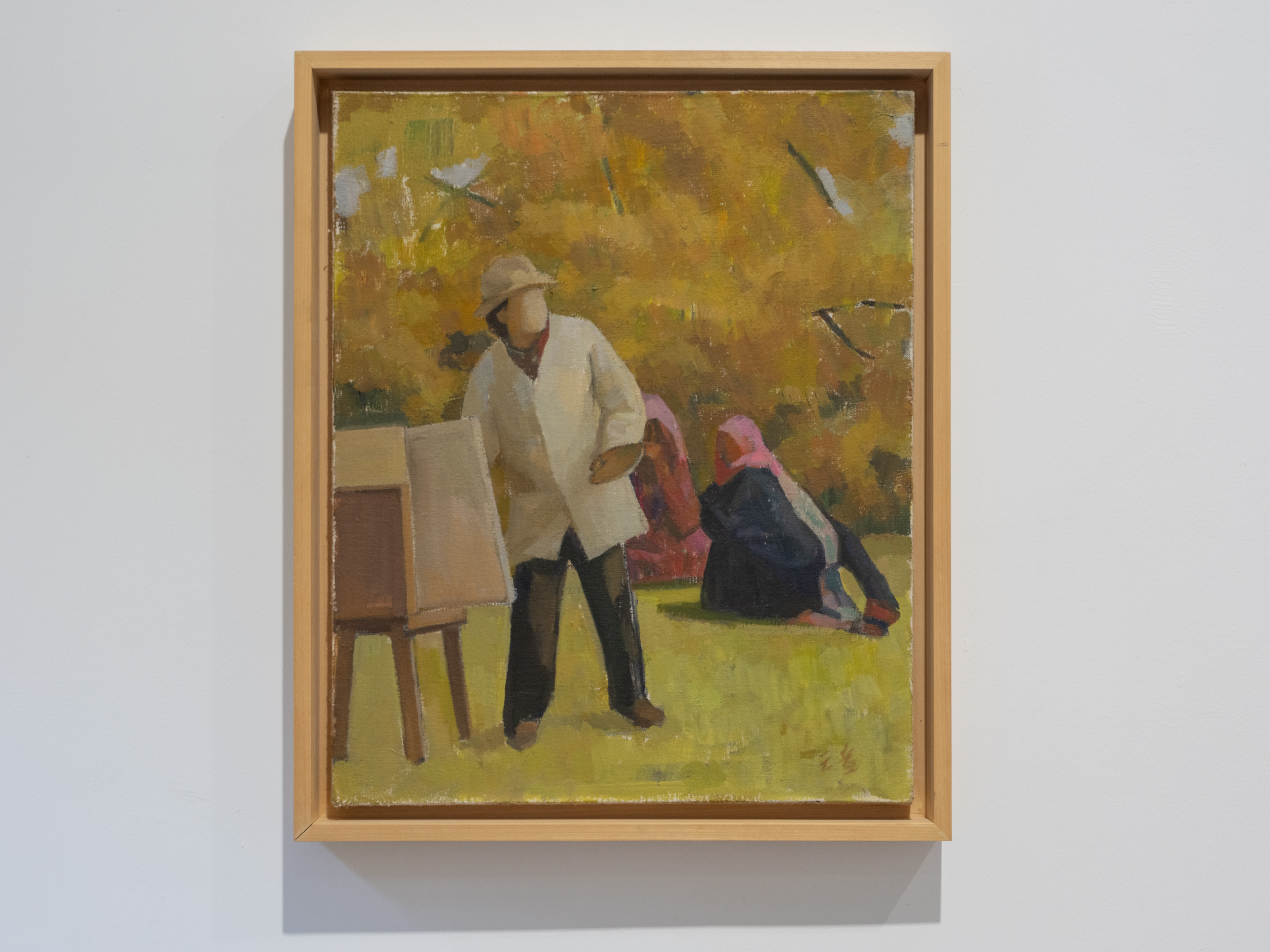
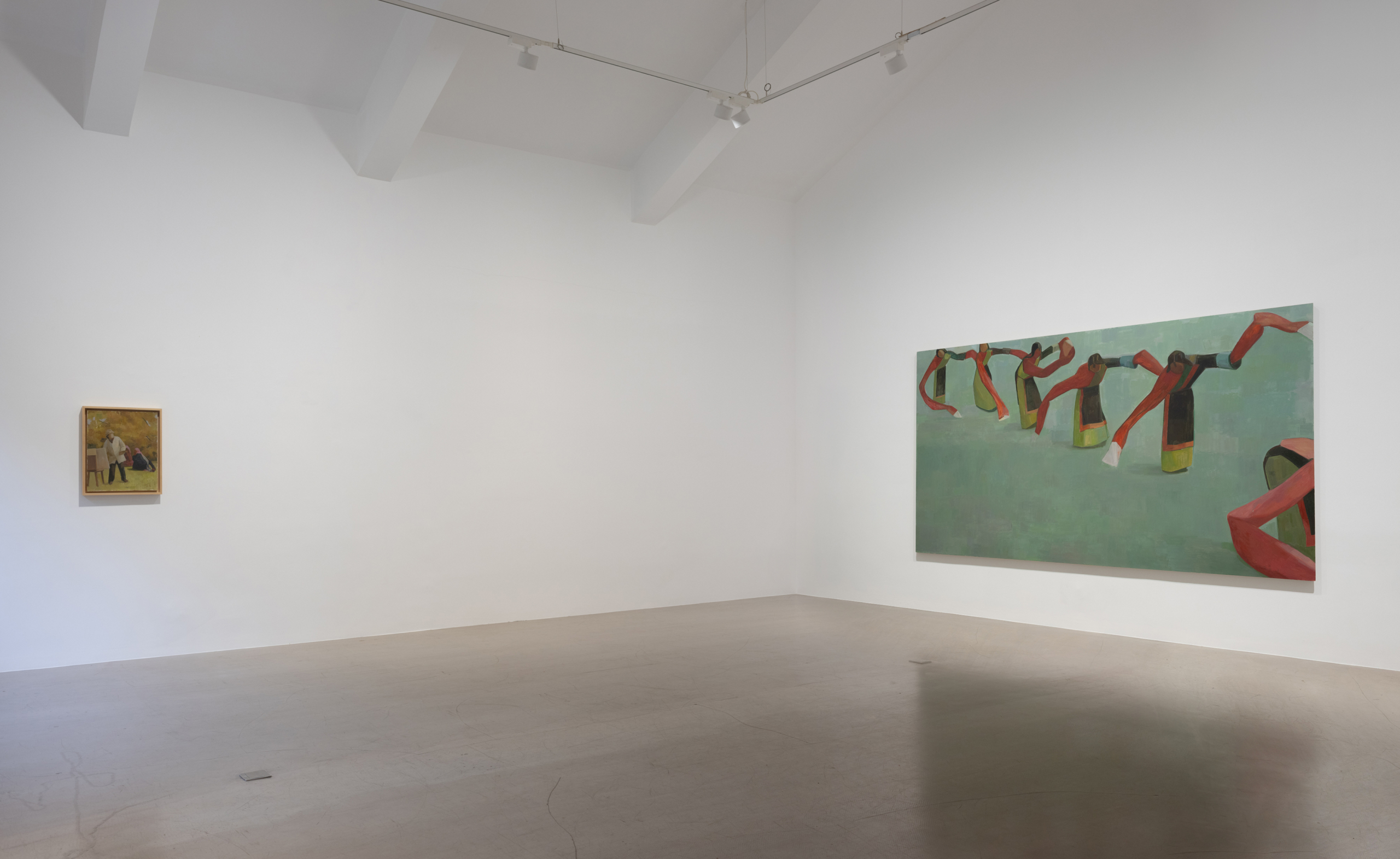
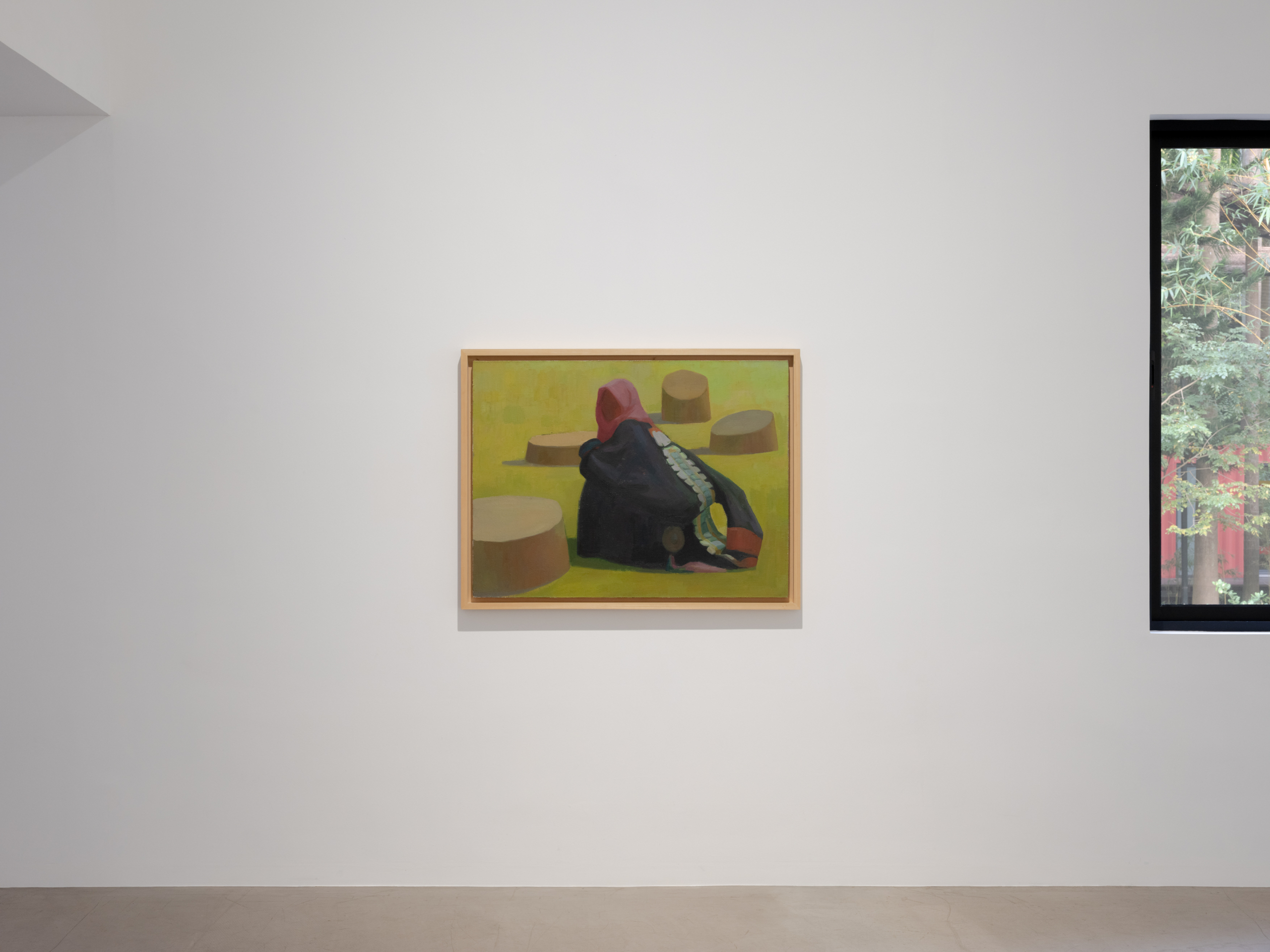
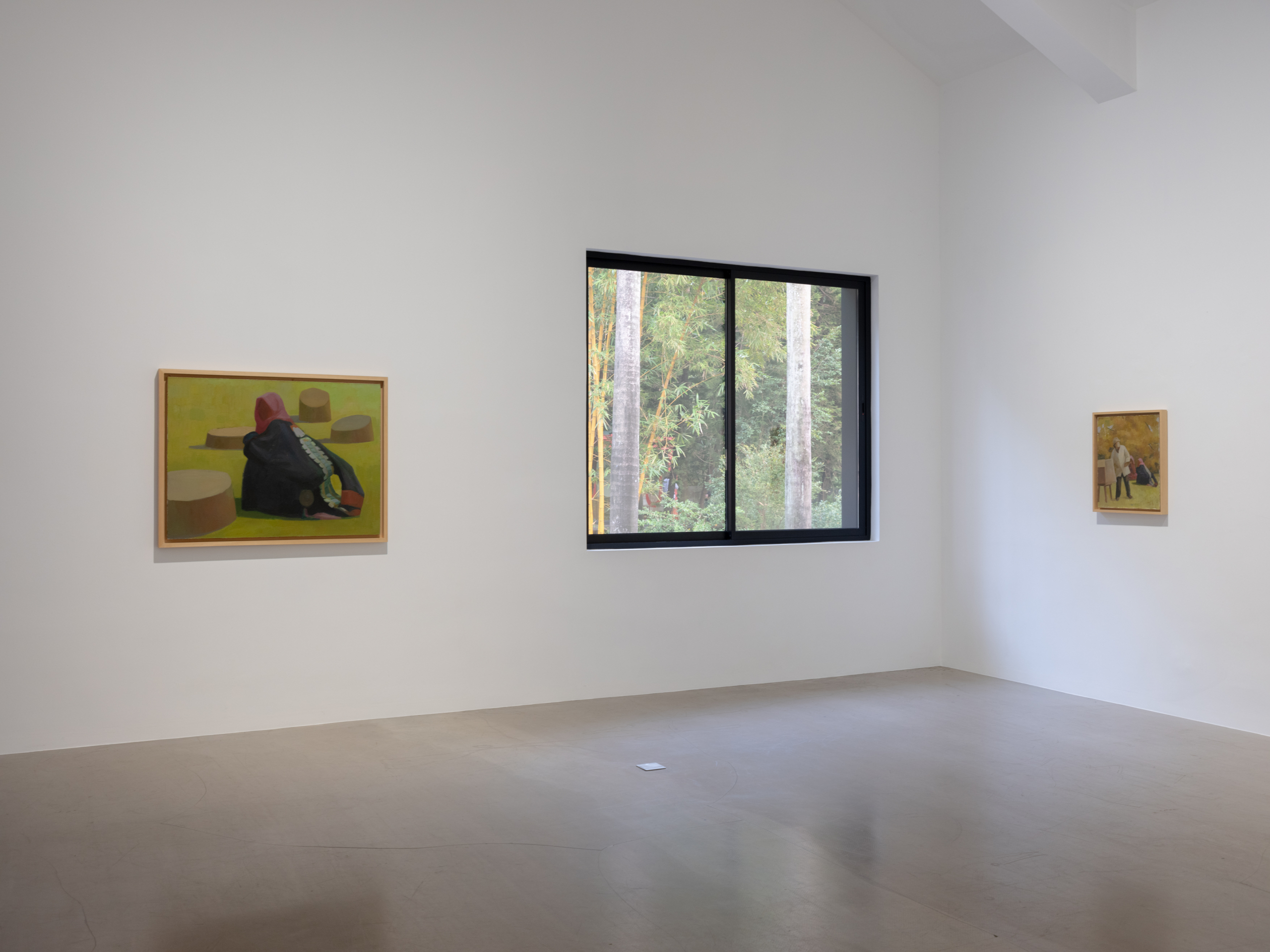
Father 1 (2010) portrays an older-generation artist sketching in a park: his canvas faces away from the viewer as his gaze extends toward the distance. In the background, however, the sudden appearance of “borderland” girls introduces a sense of dissonance. They crouch, looking toward the canvas—and toward the unseen viewer—their faces as indistinct as that of the artist.
Wang Yin’s father was a painter deeply influenced by the Soviet style, and Wang adopts this visual language to respond to the historical traces embedded in his own painting practice. Yet he does not follow the narrative logic of realism; instead, he situates himself in the “borderland” of pictorial cognition. In his hands, a once-familiar style becomes estranged, producing a subtle distance within our perceptual system. Rather than explaining or analyzing these influences, he absorbs and rearticulates them through the act of painting.
This becomes another form of reflecting on history—and another kind of “borderland dance.” Across different periods, people contemplate their own contemporaneity. Wang consciously takes on the historical destiny that painting must face, while attempting to make visible the inner genealogy of images. Within the layered transformations of modern and contemporary Chinese painting, the nationalization of oil painting, and the legacy of the Soviet style—he continues to excavate, imagine, and reconstruct, asking anew how we look at others and at history through the medium of painting. “Borderland” here refers not only to geographic margins in the modern political space; it is also the place that consciousness does not yet perceive—perhaps, a place hidden within the everyday.
Green Peony
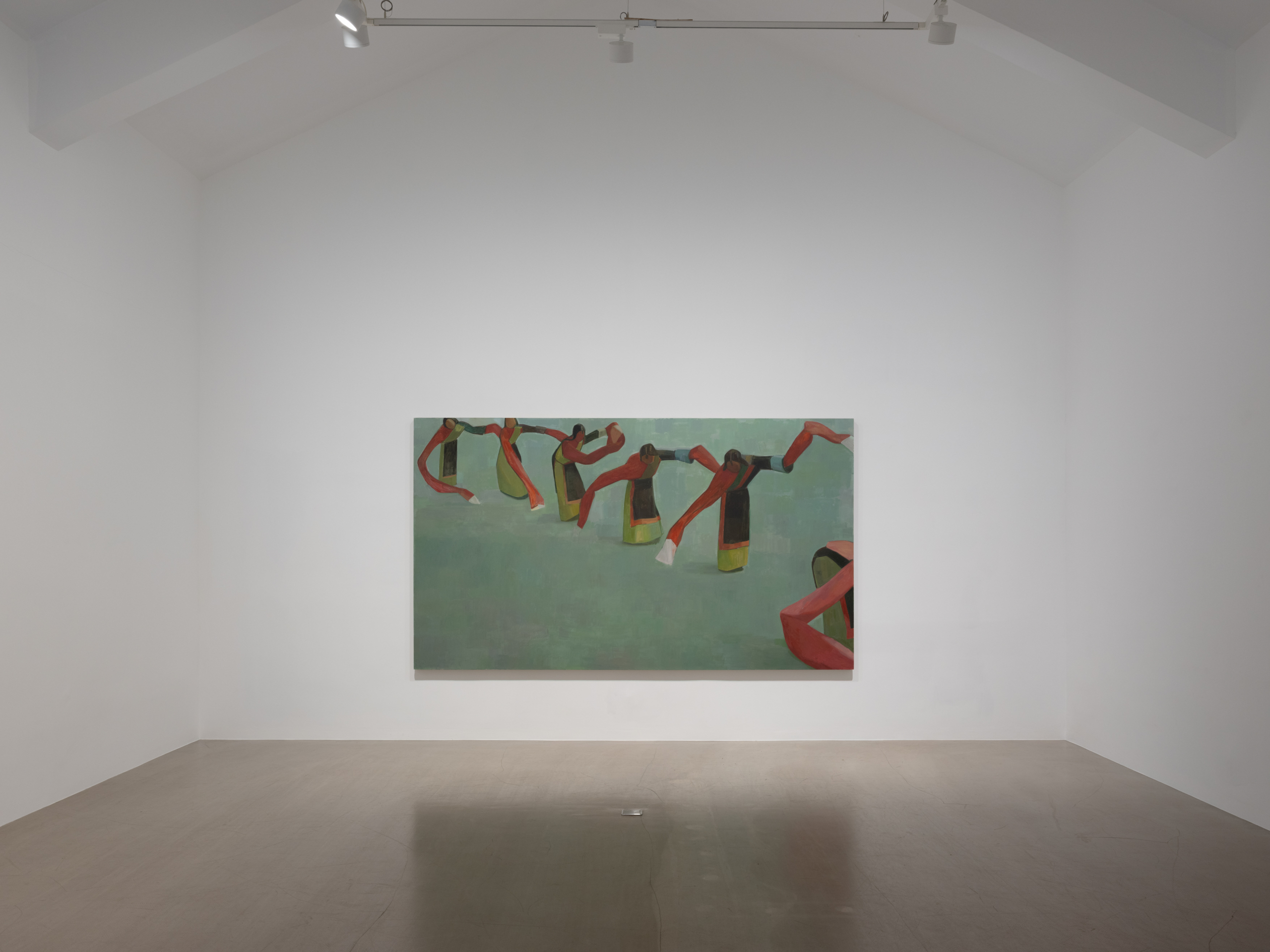
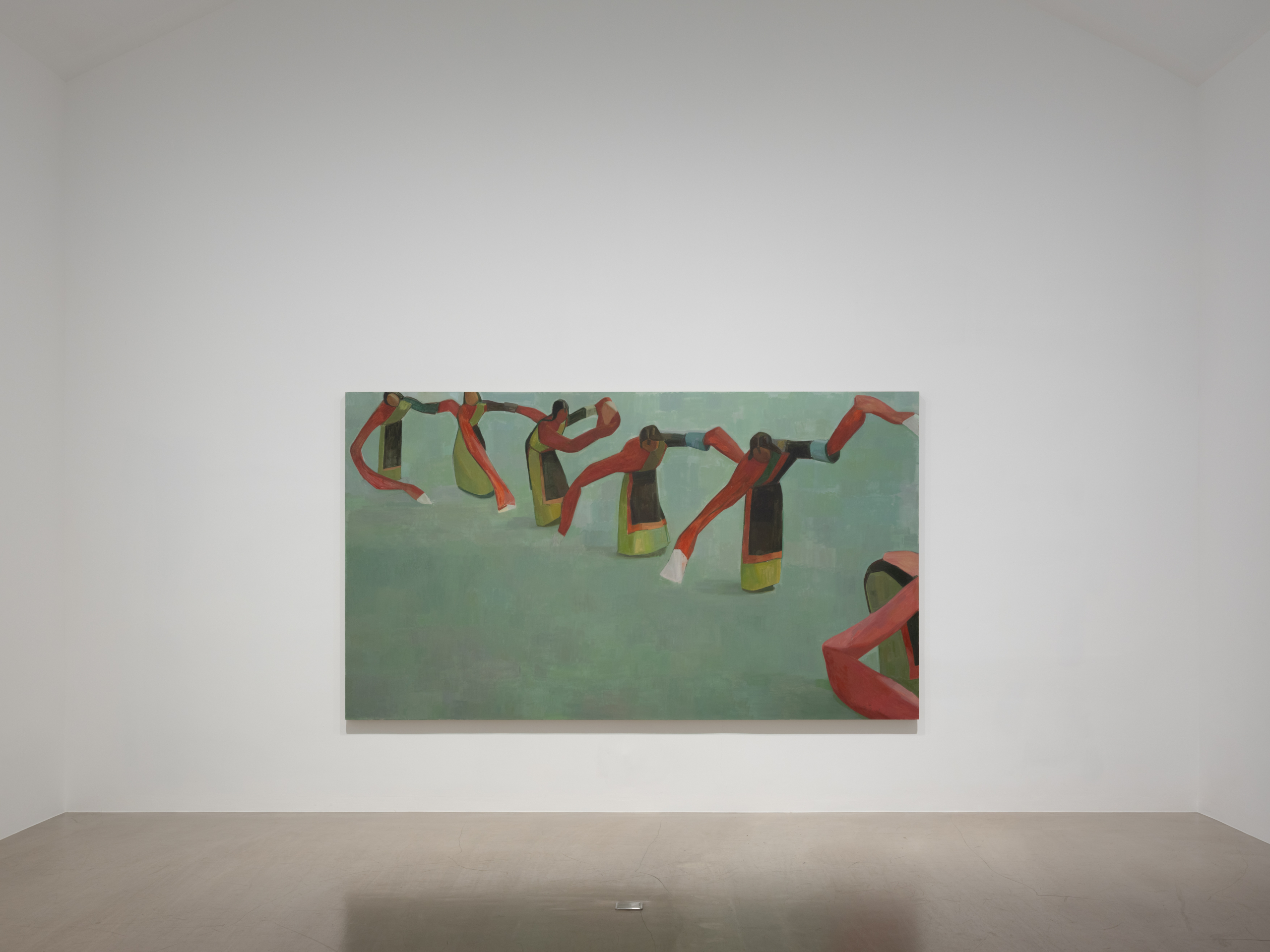
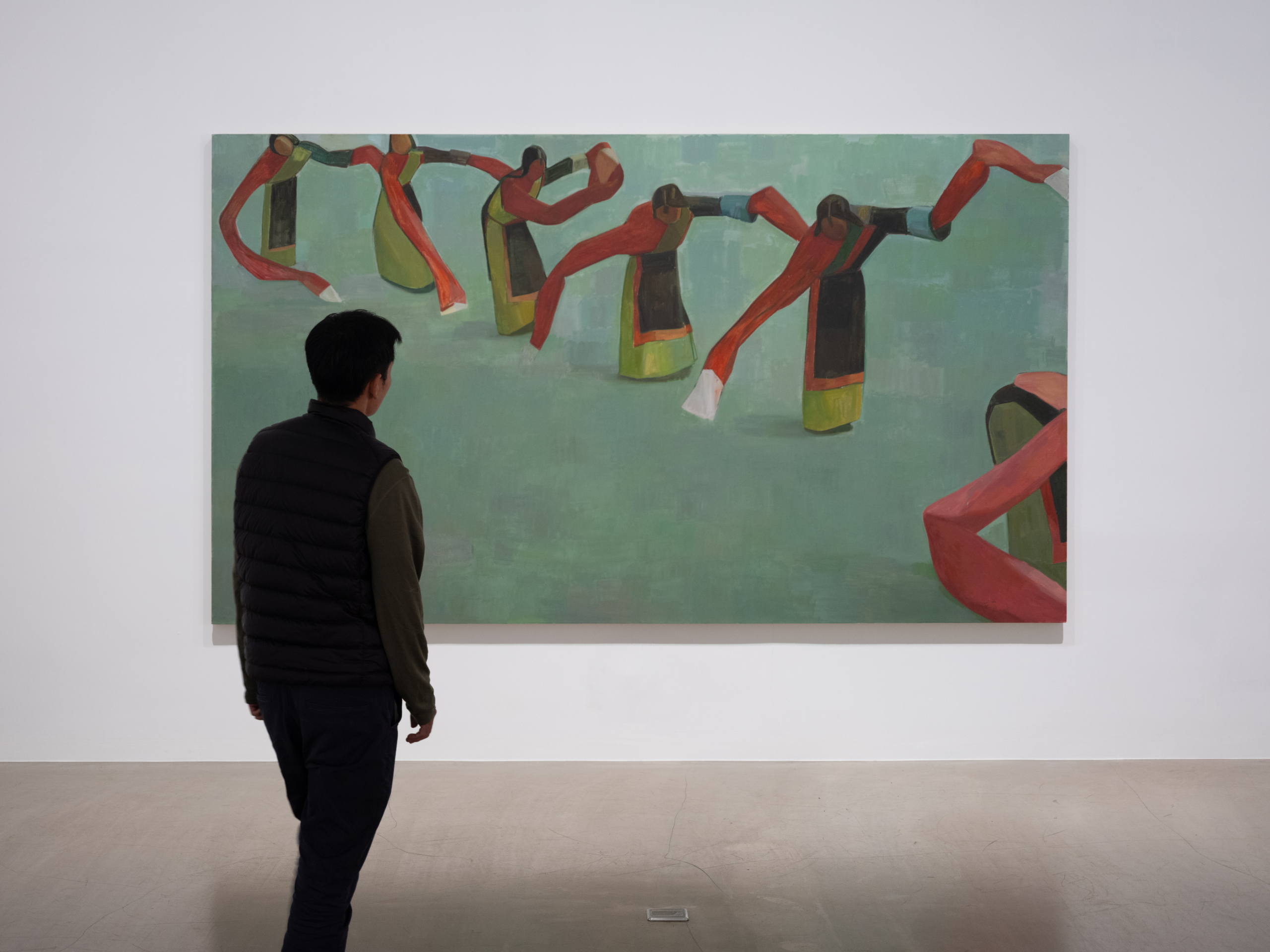
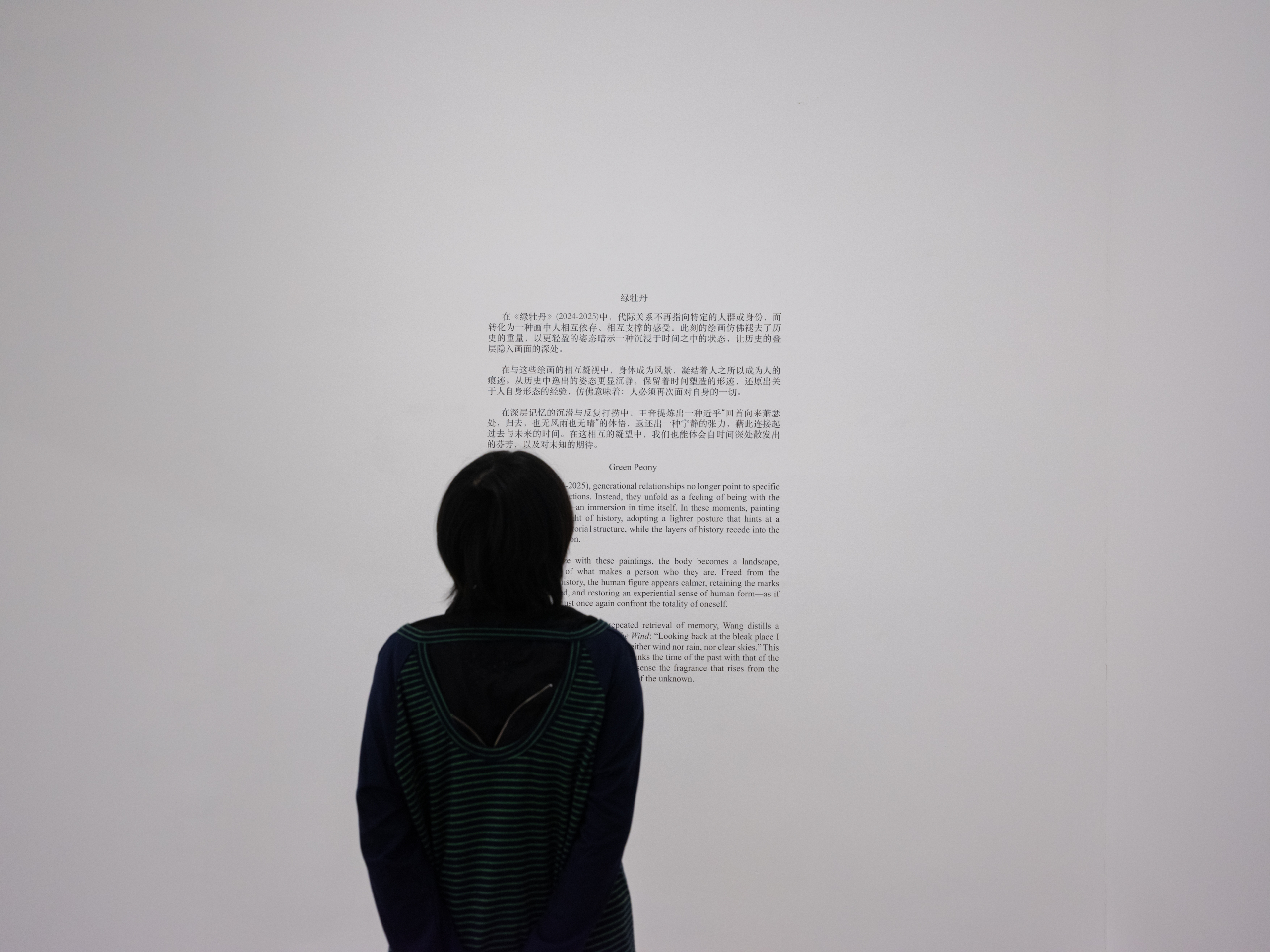
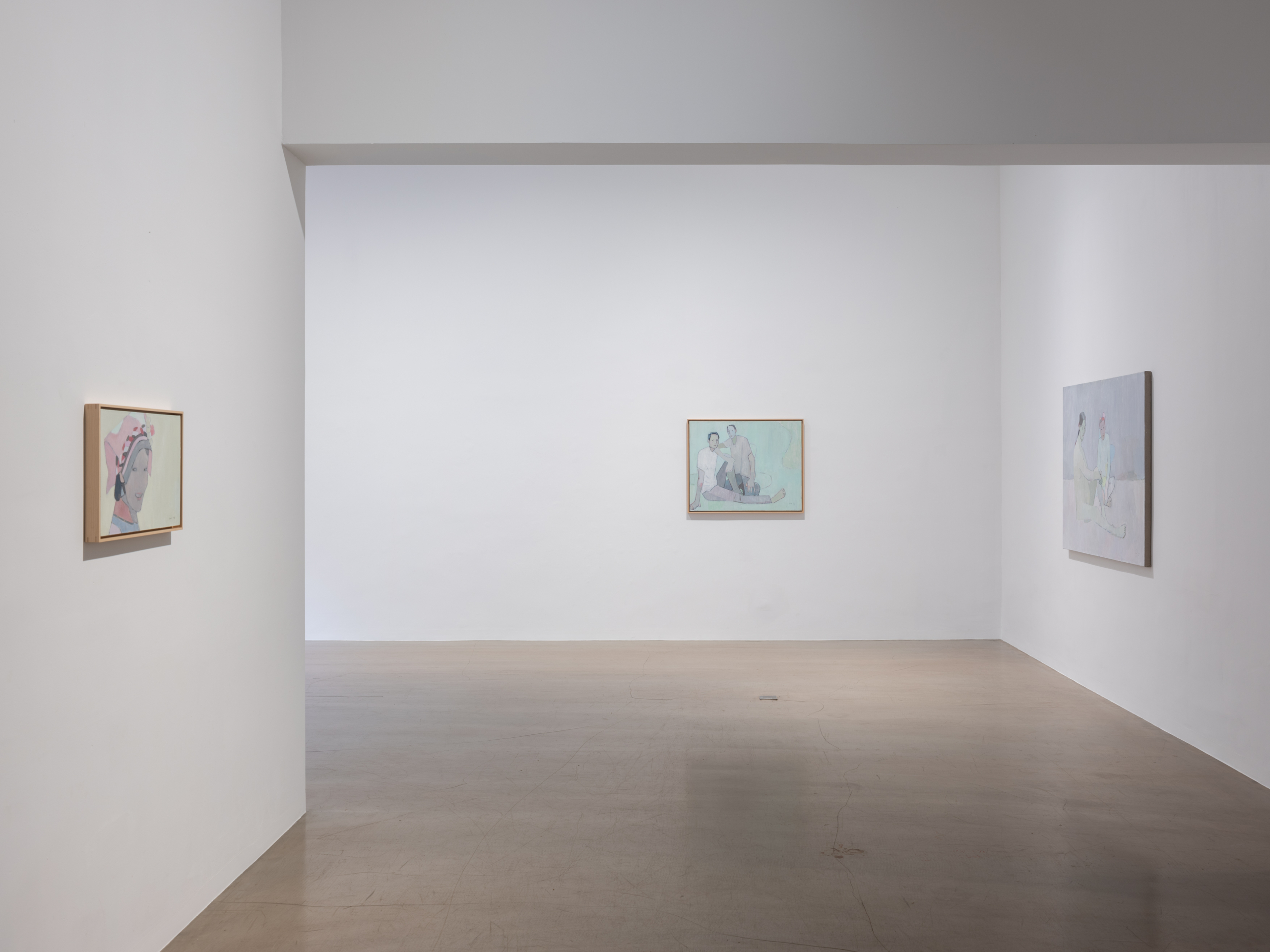
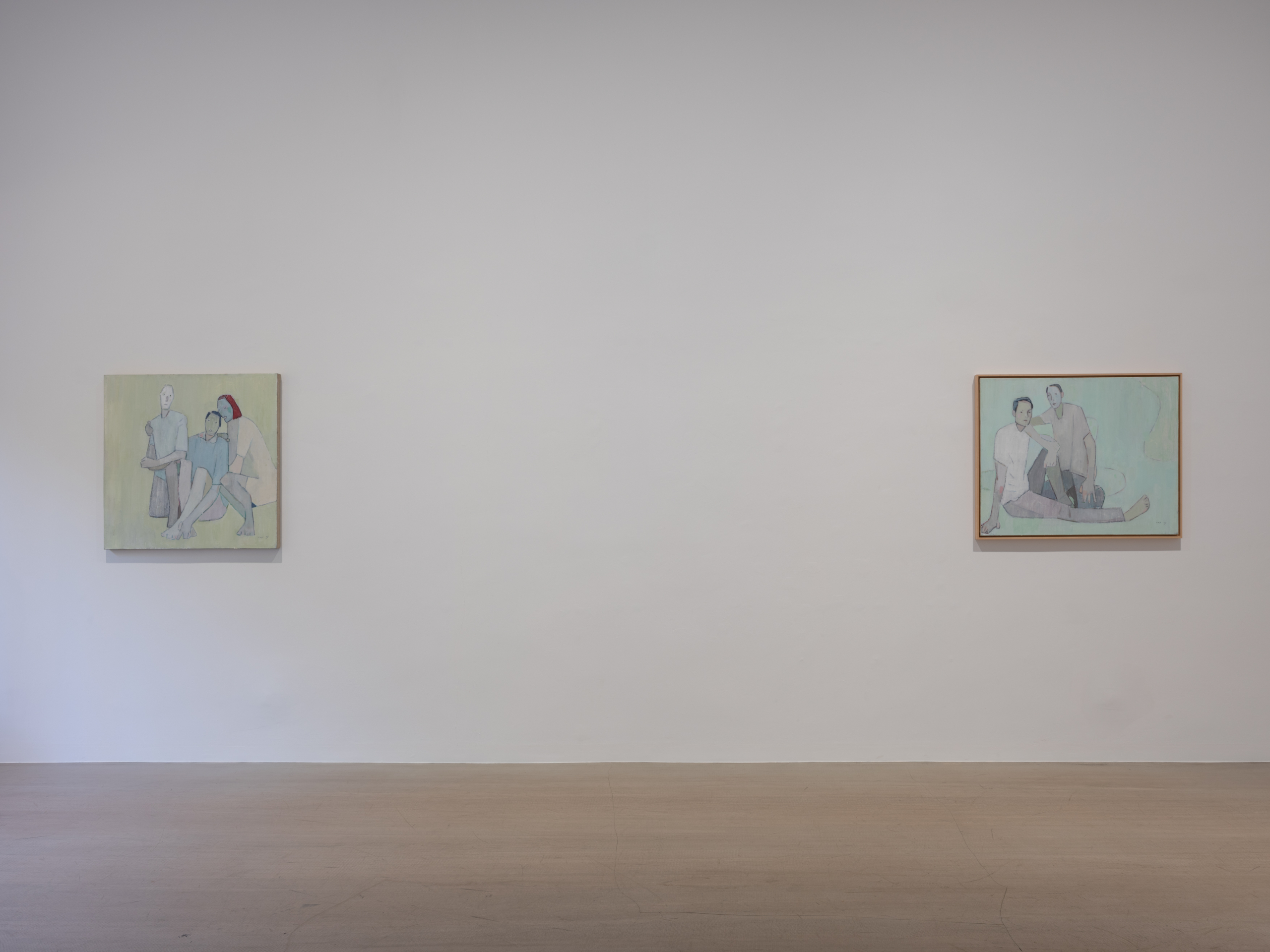
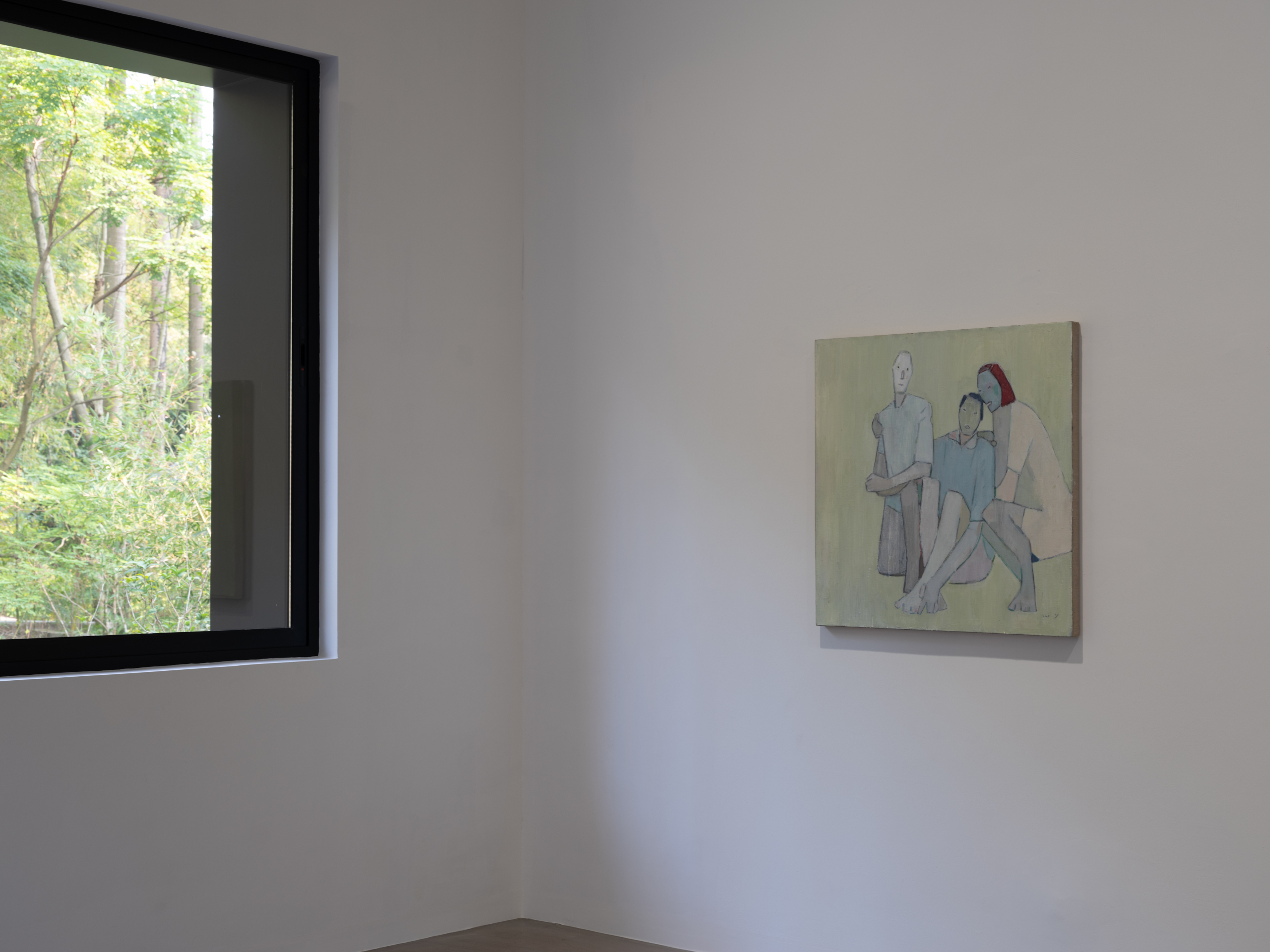
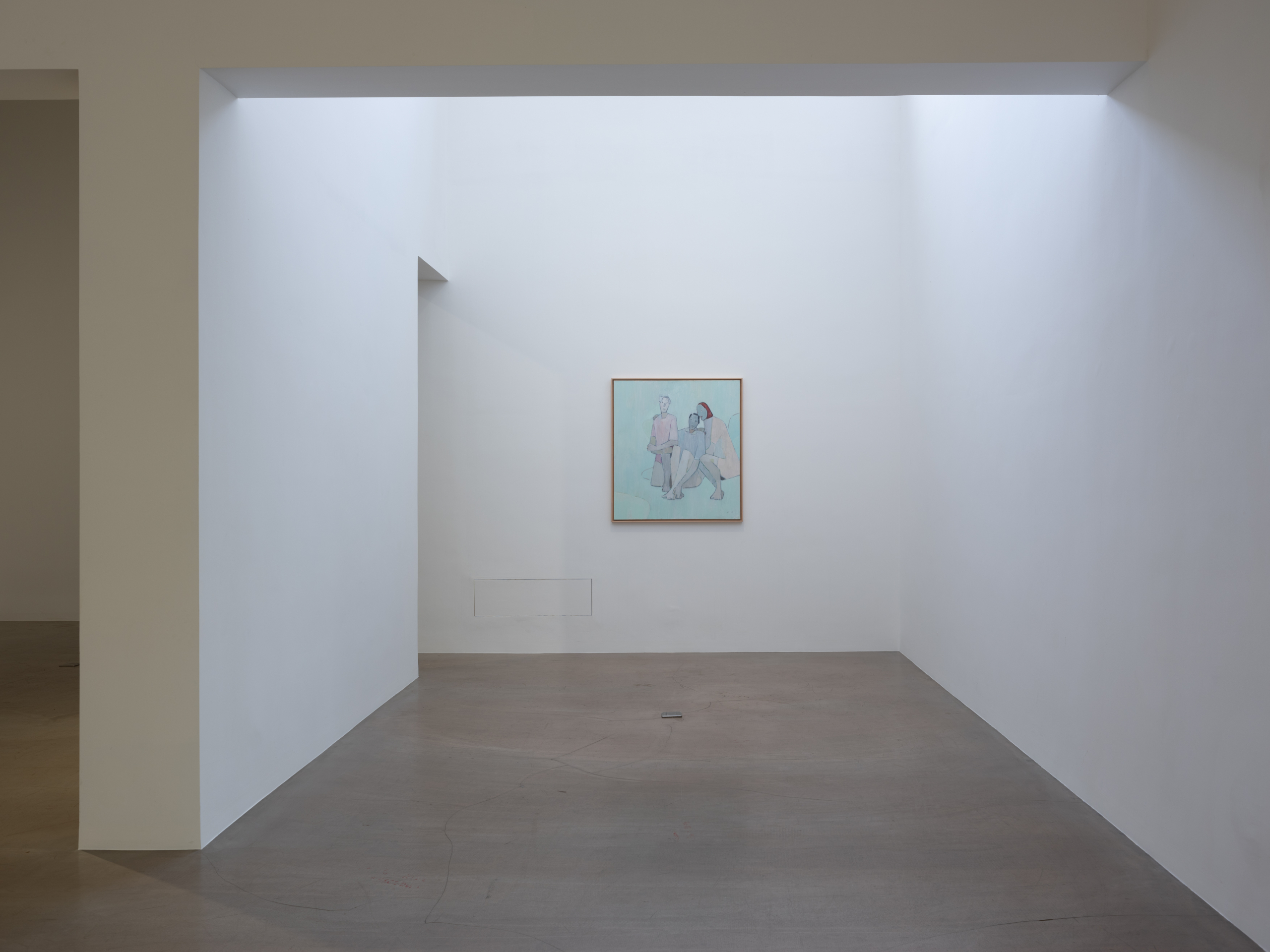
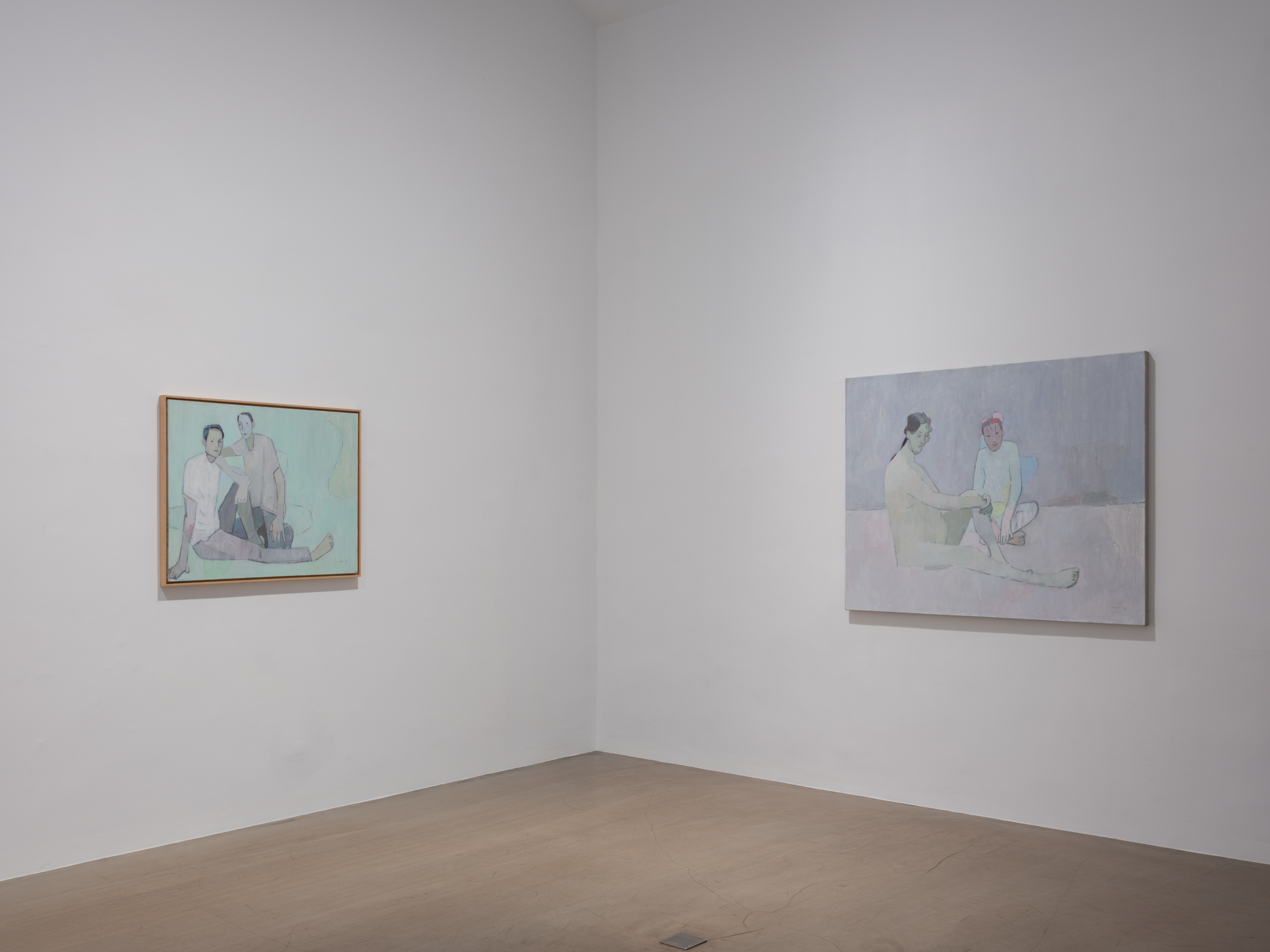
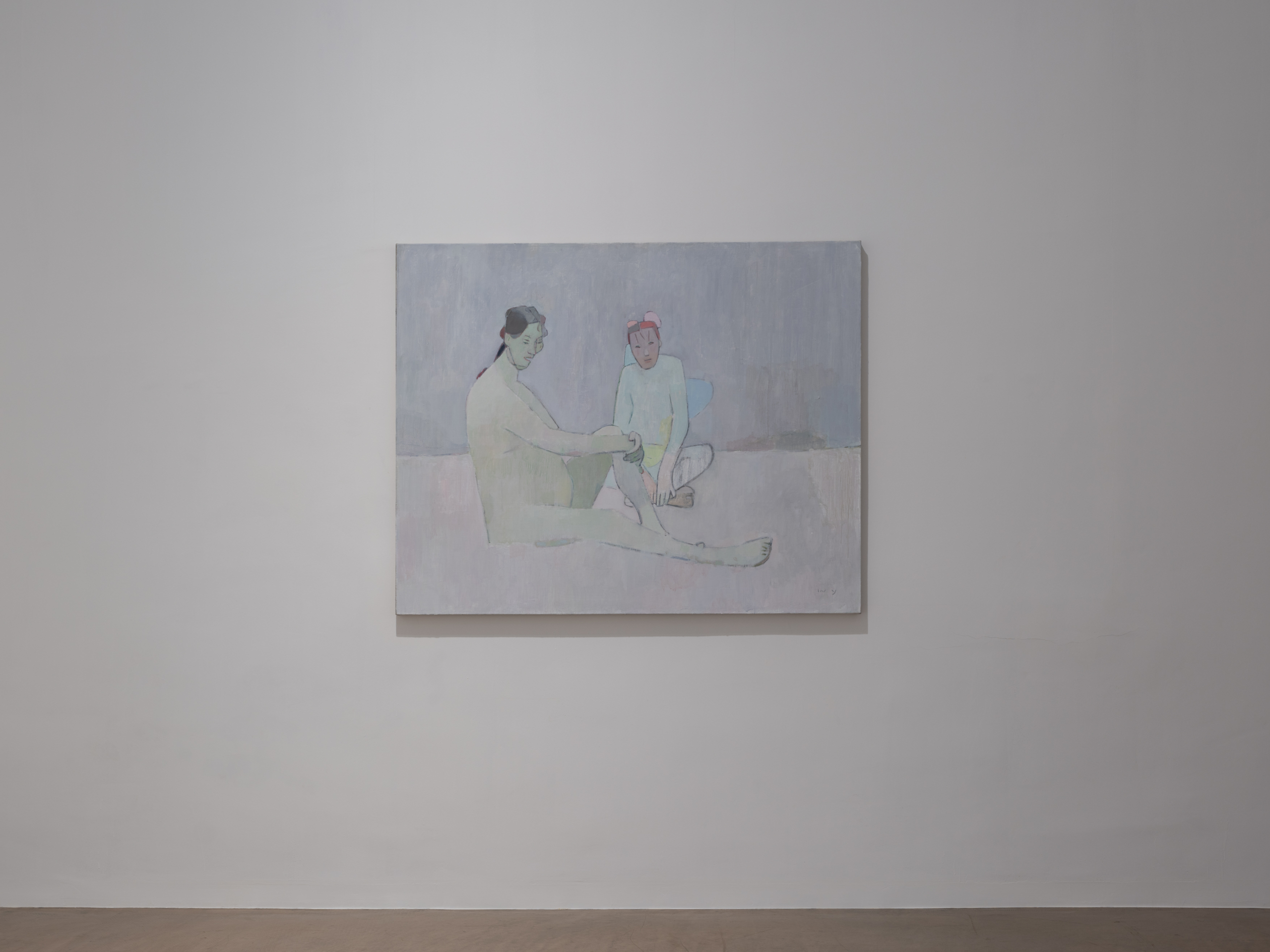
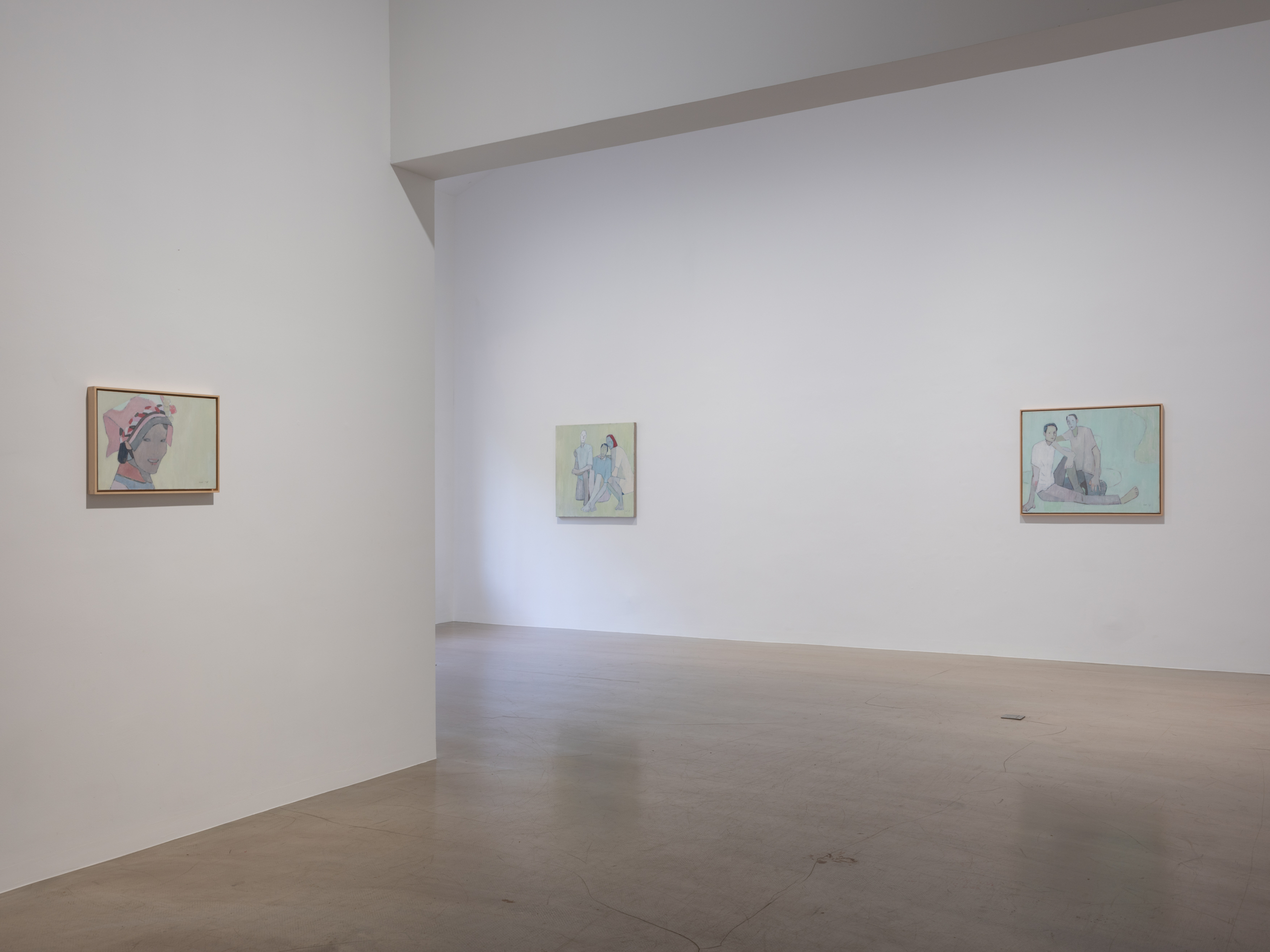
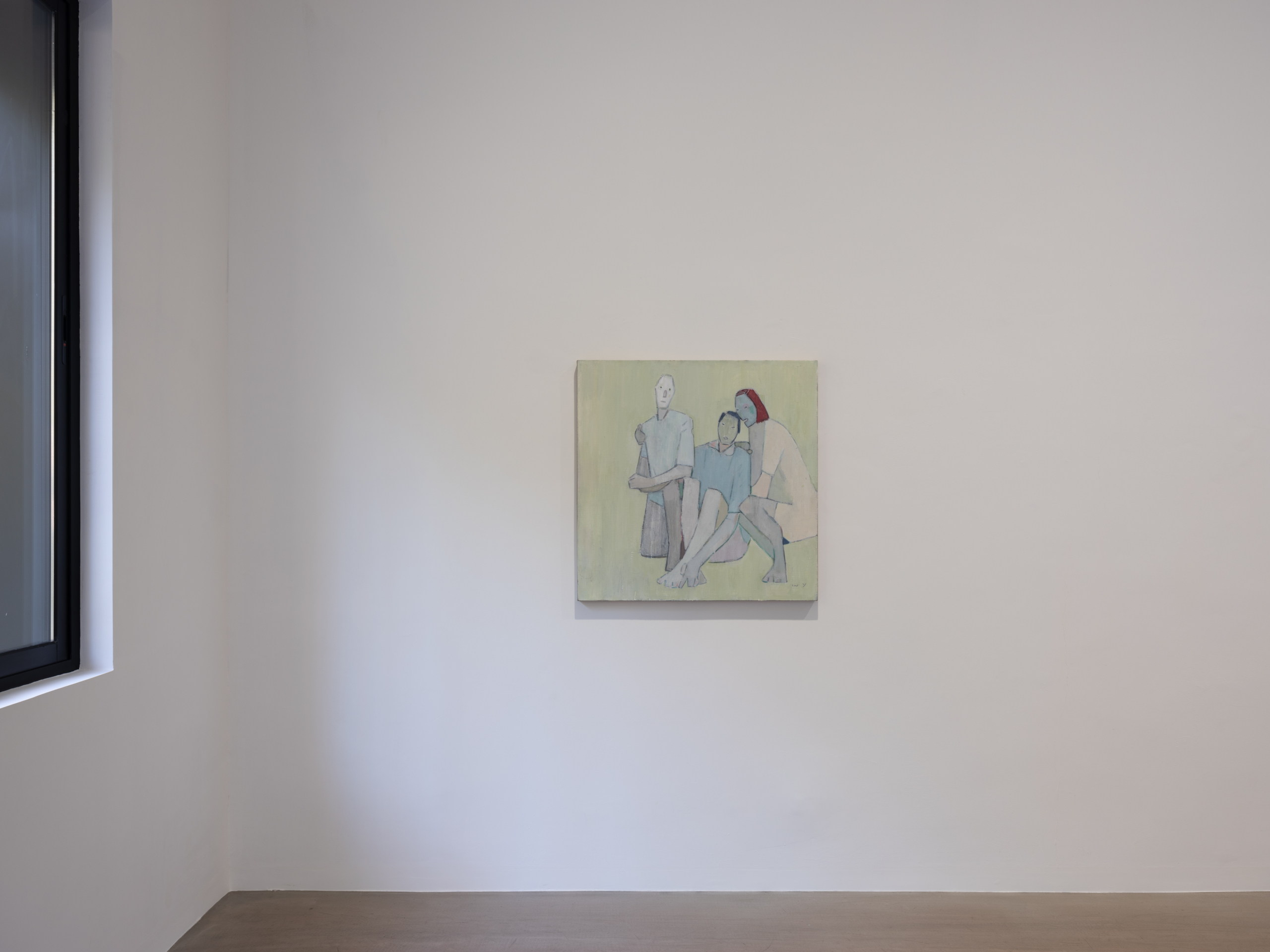
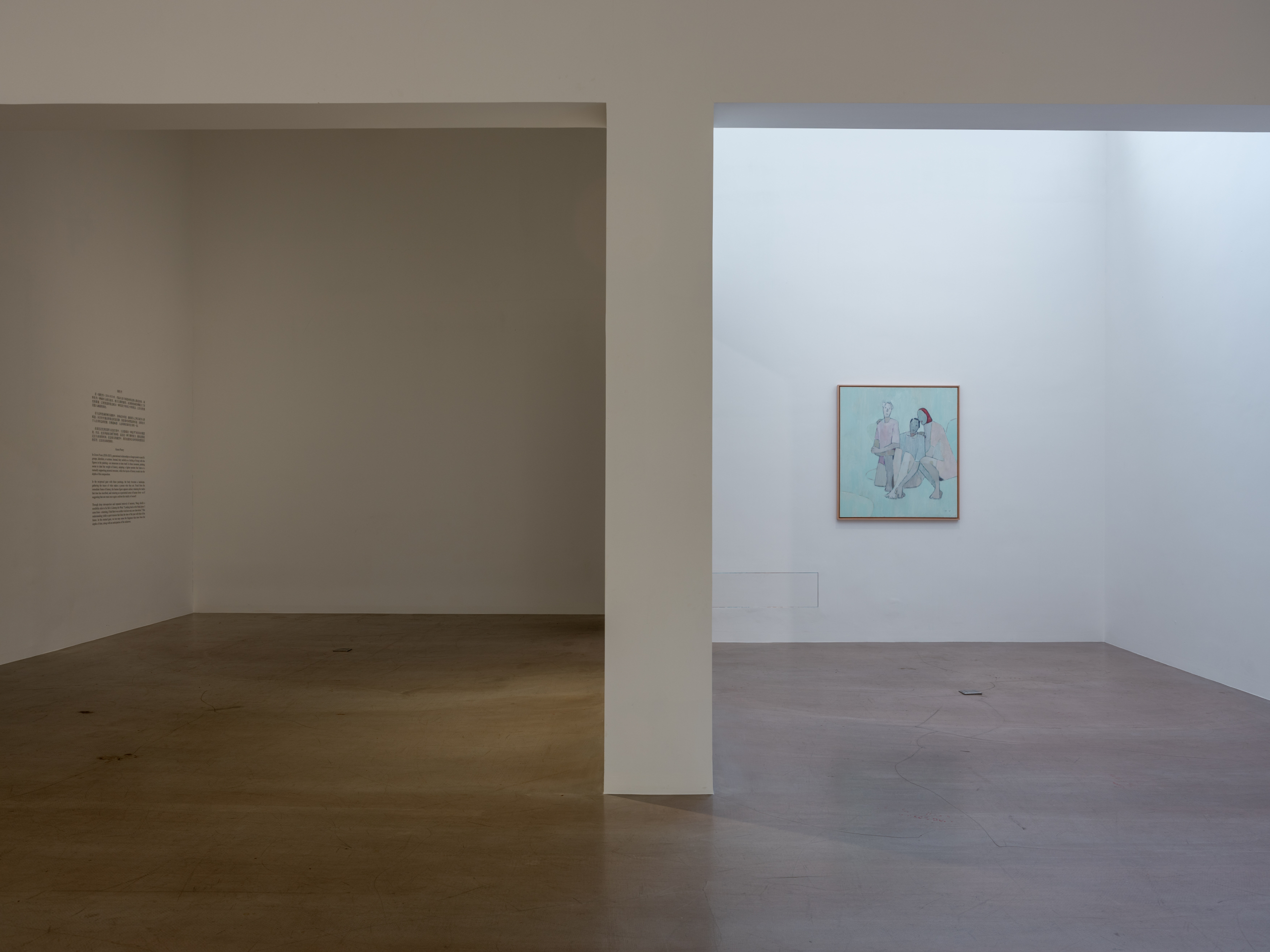
In Green Peony (2024-2025), generational relationships no longer point to specific groups, identities, or actions. Instead, they unfold as a feeling of being with the figures in the painting—an immersion in time itself. In these moments, painting seems to shed the weight of history, adopting a lighter posture that hints at a mutually supporting pictorial structure, while the layers of history recede into the depths of the composition.
In the reciprocal gaze with these paintings, the body becomes a landscape, gathering the traces of what makes a person who they are. Freed from the immediate frame of history, the human figure appears calmer, retaining the marks that time has inscribed, and restoring an experiential sense of human form—as if suggesting that one must once again confront the totality of oneself.
Through deep introspection and repeated retrieval of memory, Wang distills a sensibility akin to Su Shi’s Calming the Wind: “Looking back at the bleak place I came from—returning, I find there was neither wind nor rain, nor clear skies.” This understanding yields a quiet tension that links the time of the past with that of the future. In this mutual gaze, we too may sense the fragrance that rises from the depths of time, along with an anticipation of the unknown.
About the Artist
Wang Yin was born in 1964 in Jinan, Shandong Province, and graduated from the Central Academy of Drama in Beijing, where he currently lives and works.
Trained initially in stage design, Wang integrates emotional experience and intellectual inquiry into the language of contemporary oil painting, transforming historical forms into personal reflections on time and existence. For Wang Yin, painting is both a temporal and existential act—a way of capturing those emotional experiences in life that often remain beneath the threshold of our consciousness.
More >>
All art works by Wang Yin © the Artist
Courtesy of the artist and Vitamin Creative Space.
Vitamin Creative Space
Wang Yin: Red Peony, Green Peony
Dates
7 December 2025 – 8 March 2026
Venue
Mirrored Gardens, Space 1
Address
Hualong Agriculture Grand View Garden, Panyu, Guangzhou
Daily Opening Hours
Wednesday to Sunday, 1 to 5pm (closed on Monday and Tuesday)
Hours may vary on holidays or in special circumstances. Please check our website or WeChat Public Account for the latest updates.
Please make an appointment to visit the exhibition via the official website of Mirrored Gardens.
Website: mirroredgardens.art
Contact us: mail@mirroredgardens.art
Tel: +86 20-31043759
Press: PR@vitamincreativespace.com
Wang Yin: Red Peony, Green Peony, 5 min 03 sec. Film©The Pavilion, 2026. Courtesy of The Pavilion.
-
- Exhibition view of Wang Yin: Red Peony, Green Peony, Mirrored Gardens, Guangzhou, 2025. Photographer: Wen Peng. Courtesy of the artist and Vitamin Creative Space. © Vitamin, 2025. All works of art by Wang Yin ©the artist, 2025.
-
- Exhibition view of Wang Yin: Red Peony, Green Peony, Mirrored Gardens, Guangzhou, 2025. Photographer: Wen Peng. Courtesy of the artist and Vitamin Creative Space. © Vitamin, 2025. All works of art by Wang Yin ©the artist, 2025.
-
- Exhibition view of Wang Yin: Red Peony, Green Peony, Mirrored Gardens, Guangzhou, 2025. Photographer: Wen Peng. Courtesy of the artist and Vitamin Creative Space. © Vitamin, 2025. All works of art by Wang Yin ©the artist, 2025.
-
- Exhibition view of Wang Yin: Red Peony, Green Peony, Mirrored Gardens, Guangzhou, 2025. Photographer: Wen Peng. Courtesy of the artist and Vitamin Creative Space. © Vitamin, 2025. All works of art by Wang Yin ©the artist, 2025.
-
- Exhibition view of Wang Yin: Red Peony, Green Peony, Mirrored Gardens, Guangzhou, 2025. Photographer: Wen Peng. Courtesy of the artist and Vitamin Creative Space. © Vitamin, 2025. All works of art by Wang Yin ©the artist, 2025.
-
- Exhibition view of Wang Yin: Red Peony, Green Peony, Mirrored Gardens, Guangzhou, 2025. Photographer: Wen Peng. Courtesy of the artist and Vitamin Creative Space. © Vitamin, 2025. All works of art by Wang Yin ©the artist, 2025.
-
- Exhibition view of Wang Yin: Red Peony, Green Peony, Mirrored Gardens, Guangzhou, 2025. Photographer: Wen Peng. Courtesy of the artist and Vitamin Creative Space. © Vitamin, 2025. All works of art by Wang Yin ©the artist, 2025.
-
- Exhibition view of Wang Yin: Red Peony, Green Peony, Mirrored Gardens, Guangzhou, 2025. Photographer: Wen Peng. Courtesy of the artist and Vitamin Creative Space. © Vitamin, 2025. All works of art by Wang Yin ©the artist, 2025.
-
- Exhibition view of Wang Yin: Red Peony, Green Peony, Mirrored Gardens, Guangzhou, 2025. Photographer: Wen Peng. Courtesy of the artist and Vitamin Creative Space. © Vitamin, 2025. All works of art by Wang Yin ©the artist, 2025.
-
- Exhibition view of Wang Yin: Red Peony, Green Peony, Mirrored Gardens, Guangzhou, 2025. Photographer: Wen Peng. Courtesy of the artist and Vitamin Creative Space. © Vitamin, 2025. All works of art by Wang Yin ©the artist, 2025.
-
- Exhibition view of Wang Yin: Red Peony, Green Peony, Mirrored Gardens, Guangzhou, 2025. Photographer: Wen Peng. Courtesy of the artist and Vitamin Creative Space. © Vitamin, 2025. All works of art by Wang Yin ©the artist, 2025.
-
- Exhibition view of Wang Yin: Red Peony, Green Peony, Mirrored Gardens, Guangzhou, 2025. Photographer: Wen Peng. Courtesy of the artist and Vitamin Creative Space. © Vitamin, 2025. All works of art by Wang Yin ©the artist, 2025.
-
- Exhibition view of Wang Yin: Red Peony, Green Peony, Mirrored Gardens, Guangzhou, 2025. Photographer: Wen Peng. Courtesy of the artist and Vitamin Creative Space. © Vitamin, 2025. All works of art by Wang Yin ©the artist, 2025.
-
- Exhibition view of Wang Yin: Red Peony, Green Peony, Mirrored Gardens, Guangzhou, 2025. Photographer: Wen Peng. Courtesy of the artist and Vitamin Creative Space. © Vitamin, 2025. All works of art by Wang Yin ©the artist, 2025.
-
- Exhibition view of Wang Yin: Red Peony, Green Peony, Mirrored Gardens, Guangzhou, 2025. Photographer: Wen Peng. Courtesy of the artist and Vitamin Creative Space. © Vitamin, 2025. All works of art by Wang Yin ©the artist, 2025.
-
- Exhibition view of Wang Yin: Red Peony, Green Peony, Mirrored Gardens, Guangzhou, 2025. Photographer: Wen Peng. Courtesy of the artist and Vitamin Creative Space. © Vitamin, 2025. All works of art by Wang Yin ©the artist, 2025.
-
- Exhibition view of Wang Yin: Red Peony, Green Peony, Mirrored Gardens, Guangzhou, 2025. Photographer: Wen Peng. Courtesy of the artist and Vitamin Creative Space. © Vitamin, 2025. All works of art by Wang Yin ©the artist, 2025.
-
- Exhibition view of Wang Yin: Red Peony, Green Peony, Mirrored Gardens, Guangzhou, 2025. Photographer: Wen Peng. Courtesy of the artist and Vitamin Creative Space. © Vitamin, 2025. All works of art by Wang Yin ©the artist, 2025.
-
- Exhibition view of Wang Yin: Red Peony, Green Peony, Mirrored Gardens, Guangzhou, 2025. Photographer: Wen Peng. Courtesy of the artist and Vitamin Creative Space. © Vitamin, 2025. All works of art by Wang Yin ©the artist, 2025.
-
- Exhibition view of Wang Yin: Red Peony, Green Peony, Mirrored Gardens, Guangzhou, 2025. Photographer: Wen Peng. Courtesy of the artist and Vitamin Creative Space. © Vitamin, 2025. All works of art by Wang Yin ©the artist, 2025.
-
- Exhibition view of Wang Yin: Red Peony, Green Peony, Mirrored Gardens, Guangzhou, 2025. Photographer: Wen Peng. Courtesy of the artist and Vitamin Creative Space. © Vitamin, 2025. All works of art by Wang Yin ©the artist, 2025.
-
- Exhibition view of Wang Yin: Red Peony, Green Peony, Mirrored Gardens, Guangzhou, 2025. Photographer: Wen Peng. Courtesy of the artist and Vitamin Creative Space. © Vitamin, 2025. All works of art by Wang Yin ©the artist, 2025.
-
- Exhibition view of Wang Yin: Red Peony, Green Peony, Mirrored Gardens, Guangzhou, 2025. Photographer: Wen Peng. Courtesy of the artist and Vitamin Creative Space. © Vitamin, 2025. All works of art by Wang Yin ©the artist, 2025.
-
- Exhibition view of Wang Yin: Red Peony, Green Peony, Mirrored Gardens, Guangzhou, 2025. Photographer: Wen Peng. Courtesy of the artist and Vitamin Creative Space. © Vitamin, 2025. All works of art by Wang Yin ©the artist, 2025.
-
- Exhibition view of Wang Yin: Red Peony, Green Peony, Mirrored Gardens, Guangzhou, 2025. Photographer: Wen Peng. Courtesy of the artist and Vitamin Creative Space. © Vitamin, 2025. All works of art by Wang Yin ©the artist, 2025.
-
- Exhibition view of Wang Yin: Red Peony, Green Peony, Mirrored Gardens, Guangzhou, 2025. Photographer: Wen Peng. Courtesy of the artist and Vitamin Creative Space. © Vitamin, 2025. All works of art by Wang Yin ©the artist, 2025.
-
- Exhibition view of Wang Yin: Red Peony, Green Peony, Mirrored Gardens, Guangzhou, 2025. Photographer: Wen Peng. Courtesy of the artist and Vitamin Creative Space. © Vitamin, 2025. All works of art by Wang Yin ©the artist, 2025.
-
- Exhibition view of Wang Yin: Red Peony, Green Peony, Mirrored Gardens, Guangzhou, 2025. Photographer: Wen Peng. Courtesy of the artist and Vitamin Creative Space. © Vitamin, 2025. All works of art by Wang Yin ©the artist, 2025.
-
- Exhibition view of Wang Yin: Red Peony, Green Peony, Mirrored Gardens, Guangzhou, 2025. Photographer: Wen Peng. Courtesy of the artist and Vitamin Creative Space. © Vitamin, 2025. All works of art by Wang Yin ©the artist, 2025.
-
- Exhibition view of Wang Yin: Red Peony, Green Peony, Mirrored Gardens, Guangzhou, 2025. Photographer: Wen Peng. Courtesy of the artist and Vitamin Creative Space. © Vitamin, 2025. All works of art by Wang Yin ©the artist, 2025.
-
- Exhibition view of Wang Yin: Red Peony, Green Peony, Mirrored Gardens, Guangzhou, 2025. Photographer: Wen Peng. Courtesy of the artist and Vitamin Creative Space. © Vitamin, 2025. All works of art by Wang Yin ©the artist, 2025.
-
- Exhibition view of Wang Yin: Red Peony, Green Peony, Mirrored Gardens, Guangzhou, 2025. Photographer: Wen Peng. Courtesy of the artist and Vitamin Creative Space. © Vitamin, 2025. All works of art by Wang Yin ©the artist, 2025.
-
- Exhibition view of Wang Yin: Red Peony, Green Peony, Mirrored Gardens, Guangzhou, 2025. Photographer: Wen Peng. Courtesy of the artist and Vitamin Creative Space. © Vitamin, 2025. All works of art by Wang Yin ©the artist, 2025.
-
- Exhibition view of Wang Yin: Red Peony, Green Peony, Mirrored Gardens, Guangzhou, 2025. Photographer: Wen Peng. Courtesy of the artist and Vitamin Creative Space. © Vitamin, 2025. All works of art by Wang Yin ©the artist, 2025.
Wang Yin: History and Time
Speaker: Zhang Chen
Associate Professor, School of Humanities, Central Academy of Fine Arts
Time: 6 December 2025, 3:30–4:30 pm
Venue: Mirrored Gardens
Synopsis:
What distinguishes time from history? Here, it is difficult for us to unfold, step by step as Agamben does in Infancy and History, a critique of time and history, of the instant and continuity—from ancient Greek philosophy and Christian theology to Hegel and Marx, from astrophysics to historical materialism. Instead, we may only say this: for an artist, especially a contemporary Chinese artist, China and its pictorial history signify a construction of knowledge, a grand ideological script, and an immense structure that swallows every individual. To confront such a structure, the artist must enter its very interior in order to discern each moment of its era, to perceive the instant in which events occurred, and to understand the processes through which each past mode of painting was shaped. Only by doing so can Wang Yin locate the truth of the individual within the virtual subject of history. If the concept of history derives from a logical ordering of the past, then the form of time is far more vivid: it contains the past, present, and future simultaneously; it addresses directly each individual who experiences it; and through the ways individuals experience such time, it draws out the dialectical relations between past, present, and future—a mode of temporal experience that, for Agamben, modern humanity has lost. In terms of art, to confront time—rather than history alone—is to search for the true connection between painting and tradition, between the self and the past, and to seek the contemporaneity of painting in the present moment.
In this sense, Wang Yin clarifies history and time, and by moving from history into time, a form belonging to the artist as an individual emerges in his painting. By personally traversing the path of Chinese modern art; by coolly situating himself within the fierce struggle among historical subjects, cultural memory, and individual life; and by meticulously examining the painting techniques of each historical period since the twentieth century, as well as the cases, styles, and tonalities of artists throughout modern and contemporary times, he has now acquired—and suddenly, though arduously, articulated—this fluent and precise visual language. Here, the task of the artist’s genealogy may be said to reach its conclusion. The disputes within Chinese art—between realism and modernism, figuration and abstraction—may also be provisionally laid to rest. In Mother and Child, universal history finally enters its individual moment; the hollow past, after being unraveled thread by thread through research, becomes filled, anchoring both the position from which an artist may work and the possibilities of speaking today.